UK ZEV Mandate 2026: What Changed and What It Means
The Zero Emission Vehicle mandate is the most consequential UK car policy of the decade - and it has quietly changed in ways the headlines missed. Here is what the 33% 2026 target actually requires, how the April 2025 revisions reshaped the rules, and what it means for anyone buying or leasing a car this year.
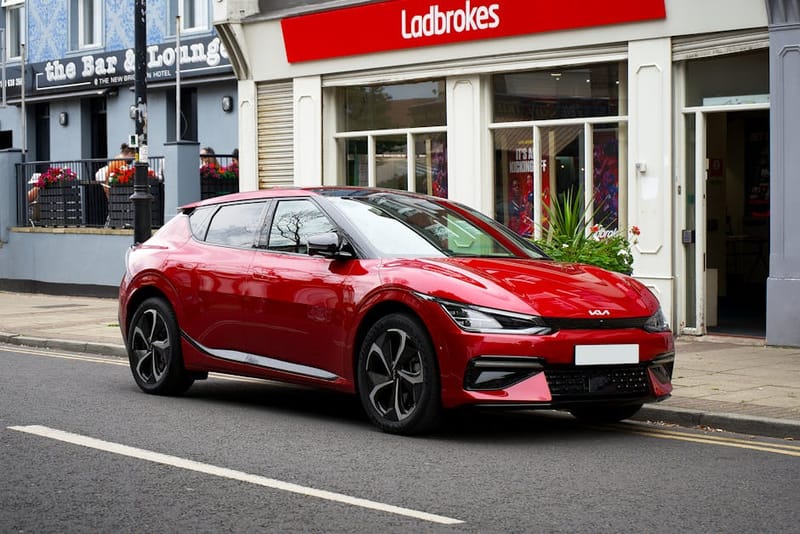
The UK ZEV mandate is the rule that quietly drives every EV discount, every hybrid launch and every dealer's quarterly sales push in 2026. It is also the most misunderstood piece of British car policy. The headline says 33% of new cars sold this year must be pure electric. The reality is more flexible - and more interesting - than that single number suggests.
What the ZEV mandate actually is
The ZEV mandate is the legal mechanism that obliges every car and van manufacturer selling in the UK to ensure a rising percentage of their annual registrations are zero-emission vehicles. It came into force on 3 January 2024 under the previous Conservative government and has been retained - with revisions - by the current administration. The compliance framework is administered by the Department for Transport under the Vehicle Emissions Trading Schemes (VETS).
The mandate is the central pillar of the UK's plan to decarbonise road transport. It is not the same as the 2030 phase-out of new petrol and diesel cars, although the two work in tandem. The phase-out tells manufacturers when they must stop selling new combustion cars. The mandate tells them how quickly they must scale up zero-emission sales in the years before that. In 2026 those two policies converge on the same point: every manufacturer's UK product plan now has a multi-year glide path baked into it.
Crucially, only fully battery-electric vehicles and hydrogen fuel-cell vehicles count as ZEVs for credit purposes. Hybrids - even plug-in hybrids that can run on battery alone for short distances - do not count. They have their own separate treatment under the parallel CO2 emissions scheme.
The 2026 targets, in plain English
For cars sold in calendar year 2026, the headline target is 33% - meaning at least 33 out of every 100 new cars a manufacturer registers in the UK this year must be a battery-electric or hydrogen vehicle. For vans, the target is 24%, on a trajectory that started at 10% in 2024 and rises to 70% by 2030.
If a manufacturer misses the target, the headline fine is £12,000 per non-compliant car (reduced from £15,000 by the April 2025 revisions) and £15,000 per van. On paper this is brutal - a manufacturer selling 100,000 cars and missing the target by 8,000 units would face a £96 million bill. In practice, no UK manufacturer paid a fine in 2024 and none is expected to pay one in 2025 either. The reason is the flexibilities built into the scheme.
Banking
A manufacturer that exceeds its target in one year can carry the surplus credits forward to a later year.
Borrowing
A manufacturer can pull future credits forward to cover a current shortfall - though the amount it can borrow shrinks each year.
Trading
A manufacturer with surplus credits can sell them to a rival that is behind. Tesla, the manufacturer with the largest natural credit surplus, has been the dominant seller in the UK market.
Conversion
Credits can also be converted between the ZEV scheme and the parallel CO2 emissions scheme - a flexibility that the April 2025 revisions significantly expanded.
The Carbon Brief factcheck published in May 2026 puts a sharp number on how much these flexibilities matter: when banking and CO2 transfers are factored in, the UK car market in 2024 effectively met a 24.5% target despite only 19.8% of new cars actually being pure electric. For 2026, analysts estimate the 33% headline can be effectively satisfied with around 25% real EV sales when the same flexibilities are applied. The Society of Motor Manufacturers and Traders (SMMT), the industry trade body, projects a persistent six-percentage-point gap between the headline target and likely real-world sales for 2026.
What changed in April 2025 - the revisions almost nobody covered properly
The April 2025 revisions to the ZEV mandate were the biggest substantive change to UK EV policy since the regulation came into force. They are also the changes most likely to affect what is on a dealer's forecourt this year. Five things changed.
1. Hybrid sales extended to 2035. Full hybrids (HEV) and plug-in hybrids (PHEV) can now be sold new until 2035, not 2030. This is the change that has reshaped manufacturer product plans for the second half of the decade. Toyota, the brand most exposed to the original 2030 phase-out, was the most visible beneficiary; the hybrid carve-out is also why several manufacturers are launching new PHEVs through 2026 and 2027 that would have made no commercial sense under the original rules.
2. ICE vans extended to 2035. New combustion-engine vans can also continue to be sold until 2035. The van sector consistently lags cars on EV uptake - 2025 van EV share was around half the regulatory target - and the revisions acknowledge that fleet operators need longer to switch.
3. Fines reduced. The per-vehicle non-compliance fine dropped from £15,000 to £12,000 for cars and from £18,000 to £15,000 for vans. This is a meaningful reduction in the worst-case downside for a manufacturer that misses targets, although the trading and conversion mechanisms make outright fines unlikely either way.
4. Credit-transfer ceiling raised. The April 2025 changes increased the cap on CO2-credit transfers - the mechanism that lets a manufacturer offset part of its ZEV obligation by selling lower-emission combustion or hybrid cars - to 90% of 2025 ZEV obligations. The non-ZEV-to-ZEV transfer system, originally due to expire after 2026, was extended out to 2029. This is the single most important change for car buyers, because it is what lets manufacturers continue to sell discounted hybrids alongside their EV ramp.
5. Small-volume manufacturers exempted. Niche manufacturers including McLaren and Aston Martin were carved out of the stringent quota requirements altogether. The argument is that exotic sports-car makers cannot realistically electrify on the same timeline as Volkswagen - and the volume they represent is rounding-error in the national CO2 totals.
What it means if you are buying a new car in 2026
The most important practical effect of the mandate on private buyers is the discounting it forces onto manufacturers. To hit even the effective 25–27% real EV share for 2026, manufacturers need to clear EV stock quickly - and the way the UK new-car market clears stock is through dealer incentives, manufacturer-funded deposit contributions, and PCP rates priced below the equivalent ICE car. SMMT figures put the average manufacturer-funded EV discount in 2025 at around £11,000 per car and the total industry-wide subsidy at roughly £5 billion. That is the buyer's-side benefit of the mandate: a structurally cheaper EV market than would otherwise exist.
The flip side is that the same flexibility mechanisms keep hybrids commercially viable for longer than the 2030 ban would have suggested. If you were planning to buy a new PHEV in 2027 or 2028, you no longer need to worry about it being your last chance - manufacturers will keep launching new ones into the early 2030s. Whether that is a good thing depends on your driving pattern: a PHEV is only as low-emission as the share of miles you actually drive on electric power. If you cannot charge at home, the running-cost case for any PHEV is weak - see our guide to home EV charging costs for the maths.
For decision-stage buyers, the practical question is whether to lock in an EV now or wait. The mandate trajectory means EV inventory in dealer showrooms will keep rising and the discounting pressure on manufacturers will keep tightening. The flip side is the underlying running cost gap between EVs and petrol - laid out in our EV vs petrol five-year cost comparison - already favours the EV for most UK drivers on the right tariff, regardless of mandate dynamics.
What it means if you already drive (or lease) an EV
Existing EV drivers benefit indirectly from the mandate in two ways. First, the discounting pressure described above means the used-EV market is being fed faster than it otherwise would be - three-year-old ex-fleet EVs are now reaching the secondary market in volume and at prices that often beat equivalent-age petrol cars on total cost of ownership. Second, the mandate trajectory provides regulatory certainty for charging-network operators, which is why public rapid-charging investment has continued through 2025 and into 2026 even as some other green-policy areas have softened.
For company-car drivers and salary-sacrifice users, the policy environment for EVs remains the strongest it has been. The very low Benefit-in-Kind (BiK) tax band for pure EVs is the single largest behavioural lever the Treasury has, and there is no sign of the BiK escalator changing through the 2026/27 tax year. Combined with cheap overnight charging on a dedicated EV tariff - see our EV tariff comparison - salary-sacrifice EV leasing is structurally cheaper than any equivalent petrol car for most higher-rate taxpayers in 2026.
Where the market actually is in mid-2026
March 2026 was the best single month for UK new battery-electric registrations on record, with 86,120 BEVs registered according to SMMT. That is a meaningful absolute milestone - it puts the UK firmly in the global top tier for monthly EV volume - but it still translated to a 22.6% monthly BEV share against the 33% mandate trajectory, because the total new-car market also grew. This is the central tension in the 2026 mandate debate: absolute EV sales are at record levels, the gap to the headline target is still real, and the flexibilities are doing the work that closes it.
Year-to-date BEV market share at group level shows the structural shift in supply. Volkswagen Group leads UK BEV sales at around 21% - spread across VW, Skoda, Audi and Cupra - followed by Hyundai-Kia at 10%, Stellantis at 9.5% and Tesla at 8.6%. The fact that the market leader is a legacy European manufacturer rather than a pure-play EV maker is itself a sign of how far the supply side has moved since 2024. Five years ago this list was Tesla and almost nobody else.
What is next - the government review and HGVs
In March 2026 the government formally launched a review of the ZEV mandate. The review's remit is to examine whether the trajectory and flexibility settings remain appropriate given actual demand and the April 2025 revisions. SMMT has called the current trajectory "quicksand" and argued for the targets to be eased further; environmental analysts have argued the opposite - that further easing risks making the 2030 phase-out commercially impossible to reach. The outcome of the review is expected before the end of 2026 and is likely to fine-tune the post-2027 trajectory rather than overhaul the headline targets.
The separate question of whether to extend ZEV-style quotas to heavy goods vehicles (HGVs) has been live in industry circles since early 2026. SMMT has warned against the move, citing battery-electric HGV registrations sitting under 1% of the segment. The government has not committed to a position. Watching this space is a useful proxy for how the political appetite for further mandate-style policy is evolving.
Frequently asked questions
Does the ZEV mandate apply to me as a buyer?
Can I still buy a new petrol or diesel car in 2026?
What counts as a ZEV under the mandate?
How big are the fines if a manufacturer misses the 2026 target?
Is the ZEV mandate likely to be repealed by a future government?
How does the ZEV mandate interact with EV grants?
The bottom line
The ZEV mandate is the most important UK car policy of the decade - but it is more flexible, more discount-driving, and less binary than the 33%-or-fines headline suggests. For new-car buyers, the practical effect in 2026 is a structurally cheaper EV market than would otherwise exist, alongside a hybrid market that will keep producing genuinely new models into the early 2030s. For existing EV drivers, the regulatory environment remains the most supportive it has been. For policy-watchers, the government review launched in March 2026 is the next material event to watch.
For a wider look at how 2025/2026 government policy has reshaped EV running costs, see our explainer on the November 2025 Budget changes for EV drivers - the BiK rates, VED, and salary-sacrifice landscape it locked in are the demand-side counterpart to everything the mandate is doing on the supply side.
Find the cheapest EV tariff for 2026
If you already drive an EV, your tariff makes more difference to running costs than any policy change. We track every UK EV tariff each month.