Utility Warehouse EV Tariff Review (2026): 7.5p Catch
UW EV tariff drops to 7.5p/kWh (October 2026) - but only if you bundle 3+ services. Here's how it stacks up against Octopus, EDF, and Scottish Power.
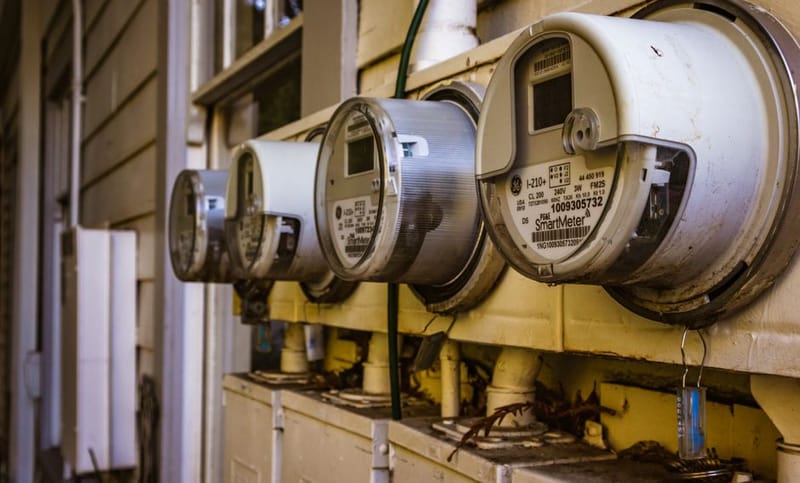
Utility Warehouse's EV tariff has a headline overnight rate of 7.5p per kWh between midnight and 5am as of October 2026, per a third-party tariff review (UW publishes no public EV rate card). The catch: that rate is only available to households bundling at least three UW services. Without the bundle, you're paying 9p - more than EDF GoElectric, Scottish Power EV Saver or Intelligent Octopus Go - and the value calculation flips entirely.
How UW's tiered EV pricing works
Utility Warehouse is unusual in the UK energy market. It's a multi-service bundler - energy, broadband, mobile, boiler & home cover, all sold under one membership - rather than a pure-play supplier. The EV tariff is priced as part of that bundle, and the off-peak rate steps down as you add services:
- Energy only (1 service): 9p per kWh off-peak
- Energy + 1 other (2 services): 8.5p per kWh off-peak
- Energy + 2 others (3+ services): 7.5p per kWh off-peak
Those are the October 2026 tiers as reported by a third-party review; before then they were 8.5p, 8p and 7p.
The off-peak window is 5 hours - midnight to 5am GMT - across all tiers. There's no smart-scheduling integration; what you get is a simple whole-home time-of-use product, with the kicker being the bundle-dependent rate.
UW estimates members save up to £350 a year on energy by shifting EV charging into the off-peak window. That figure assumes the cheapest tier and roughly average UK EV mileage (around 7,500-9,000 miles/year). On the 9p energy-only tier with the same usage, savings versus a standard variable tariff drop closer to £250-300.
How UW compares to other 2026 EV tariffs
| UW EV (3+ services) | UW EV (2 services) | UW EV (energy only) | EDF GoElectric | Intelligent Octopus Go | Scottish Power EV Saver | |
|---|---|---|---|---|---|---|
| Off-peak rate | 7.5p/kWh | 8.5p/kWh | 9p/kWh | 6.66p/kWh | 7.6p/kWh | 6.86p/kWh |
| Off-peak window | 5 hours (00:00-05:00) | 5 hours (00:00-05:00) | 5 hours (00:00-05:00) | 7 hours (23:00-06:00) | 6 hours (23:30-05:30) | 5 hours (00:00-05:00) |
| Bundle requirement | Energy + 2 others | Energy + 1 other | None | None | None | None |
| Smart scheduling | No | No | No | No | Yes | No |
The comparison surfaces the obvious question: if EDF GoElectric is 6.66p with a 7-hour window and no bundle requirement, why would you go to UW for 7.5p with a shorter 5-hour window and three required services?
The answer hinges on what you're paying for those services elsewhere. UW's value proposition isn't really the EV rate in isolation - it's the bundled total. If UW's broadband, mobile, and boiler cover pricing is competitive with what you currently pay for the same services across separate providers, the EV rate becomes a bonus. If UW's bundle pricing is materially higher, the EV rate's headline advantage gets swallowed by the rest of the bill.
When the UW EV tariff makes sense
Households already shopping for a service bundle
If you're switching broadband and mobile anyway - for example, moving house or coming off a fixed contract - UW's bundle deserves a quote. The 7.5p EV rate is genuinely competitive at that tier, and the simplification of a single monthly bill across utilities has real value for some households.
Heavy overnight chargers comfortable in the 5-hour window
If your EV draw fits inside the 00:00-05:00 window - typically 30-35 kWh per session at 7kW - the 7.5p rate edges Intelligent Octopus Go's 7.6p but trails EDF GoElectric (6.66p) and Scottish Power EV Saver (6.86p) as of October 2026. EDF's 7-hour window is also more forgiving for larger batteries.
Members who use UW's affiliate/Partner programme
UW runs a network of commission-based marketers (called Partners) who get reductions on their own bills when they sign up new customers. If you're already in that network or considering joining, the EV tariff is one more leverage point in the overall bundle calculation.
Where the UW EV tariff falls short
The biggest drawback is the bundle gate on the cheap rate. A household that doesn't need UW's broadband or mobile - say, you're locked into a competitive fibre contract for another 18 months - has to pay 8.5p or 9p instead of 7.5p (October 2026). Either way that is more than Intelligent Octopus Go (7.6p) without IOG's smart-scheduling extras, and more than Scottish Power EV Saver (6.86p) with no obvious benefit.
The second gap is the off-peak window. Five hours (00:00-05:00) is the shortest among major UK EV tariffs. EDF's seven hours and IOG's six (plus smart-scheduled extras) give significantly more flexibility for households charging large batteries from near-empty, or running two EVs through one charger overnight.
Third, UW doesn't offer smart-charging integration. Intelligent Octopus Go can dispatch your car's charge to extra off-peak periods when grid wind generation is high - effectively unlocking more cheap hours than the published window suggests. UW's tariff is fixed: the 5-hour window is all you get.
Doing the bundle maths
The decision rule is straightforward once you frame it correctly: compare the total monthly outlay across all UW services against the same services priced separately. The EV rate is only one input.
A rough framework for typical UK households (figures are illustrative; quote your specific bundle from UW directly):
- Energy: UW's standard variable rate is broadly cap-tracking. Compare to your current cap-based tariff or the cheapest fixed deal on the market.
- Broadband: UW resells via TalkTalk/CityFibre/other backbones. Compare like-for-like on speed tier and contract length against Sky, BT, Vodafone, Plusnet equivalents.
- Mobile: UW resells via EE's network. Compare against EE direct, plus the budget MVNOs (Smarty, Voxi, Lebara) on the same usage profile.
- Boiler & Home Cover: UW resells boiler insurance. Compare against British Gas HomeCare, CheckaTrade, or self-insurance.
If UW's bundle total is within £5-10/month of the cheapest separate-providers stack, the 7.5p EV rate plus the bill-consolidation convenience can justify the switch. If the gap is £20+/month against separate providers, the EV rate advantage rarely makes up the difference for typical 9,000-mile-a-year drivers.
Switching to UW: the process
Get a personalised quote across all services
UW quotes by phone or online - you'll need to specify which services (energy, broadband, mobile, boiler cover) and your usage on each. Have your current bills handy to compare like-for-like.
Confirm smart meter eligibility
Like every UK EV tariff, the EV add-on requires a smart meter sending half-hourly readings. UW handles the switch if you don't have one yet - adds 2-4 weeks to the timeline.
Bundle services concurrently
To hit the 7.5p tier from day one, all three+ services need to switch together. Staggered switches mean you start at the 9p or 8.5p tier and only drop to 7.5p once the third service is live - costing you the bundle benefit during the gap.
Test bills against the comparison framework
After the first full bill cycle (usually 6-8 weeks post-switch), compare actual total spend against what you'd have paid with separate providers. UW makes the rate breakdown visible in the member portal.
Frequently asked questions
Is the UW EV tariff cheaper than Intelligent Octopus Go?
Can I get UW's EV tariff without bundling other services?
Does UW offer EV charger installation?
Is UW's energy supply 100% renewable?
Are there exit fees if I switch away from UW?
See how UW compares to every UK EV tariff
Full 2026 ranking with rates, windows, and decision matrix for mileage, battery size, and solar.