Tesla Model Y Home Charging UK 2026
Tesla Model Y UK home charging 2026: best tariff (Intelligent Octopus Go), best charger (Tesla Wall Connector), £400-£700 saving.
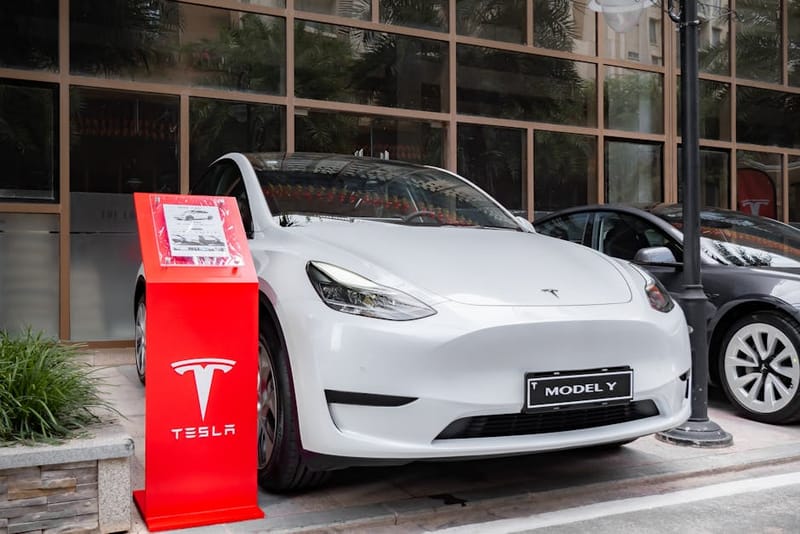
The Tesla Model Y is the UK's best-selling EV in 2026 and the question of how to charge it at home cheaply comes up almost weekly on UK Tesla owner forums. The good news is that Tesla integrates cleanly with the UK smart-tariff ecosystem - especially Octopus Intelligent Octopus Go - and the setup is one of the simpler ones in the UK market once you know the choices.
This guide covers the tariff choice (which one and why), the charger choice (Tesla Wall Connector vs third-party), the Octopus + Tesla connection setup, realistic annual savings, and the small Tesla-specific gotchas that catch first-time UK Model Y owners.
Which UK tariff is best for a Tesla Model Y in 2026?
Intelligent Octopus Go, comfortably. Two reasons. First, the cheap-rate window is 23:30-05:30 (a generous 6 hours) at 7.6p/kWh as of October 2026 - among the cheapest overnight rates available to UK consumers. Second, Octopus has a native Tesla connection that lets the tariff talk to the car directly: it tells the car when to charge and the car responds. No need for the charger to be tariff-aware - the car does it.
OVO Charge Anytime is a credible alternative for flexible scheduling, though its PAYG rate is 13.33p/kWh as of October 2026 and it requires a compatible smart charger to do the scheduling (the car does not natively integrate). For Tesla owners specifically, this loses the elegance of the Octopus + Tesla setup.
EDF GoElectric is a worth-knowing third option at 6.66p/kWh (7-hour window, as of October 2026) but does not have native Tesla integration; you schedule via the car's app instead.
Standard Octopus Go (a 5-hour 00:30-05:30 window at 8.21p/kWh as of October 2026) is still available but Intelligent Octopus Go is the strictly better pick for Model Y owners.
Should you install the Tesla Wall Connector or a third-party charger?
Honest answer: it depends on whether you might own a non-Tesla EV in the next 5-7 years.
The Tesla Wall Connector at ~£480 plus £200 install (£680 installed total) is the simplest and most aesthetic choice. It is the cheapest 7 kW home charger installed by a credible OZEV-approved installer (most UK Tesla-approved installers offer this bundle). The integration with the Tesla app is seamless. The downside is that it is a Type 2 socket only and not particularly flexible for future-proofing.
A third-party 7 kW charger like Ohme ePod (£700 installed) or Easee One (£600 installed) costs roughly the same but gives you broader compatibility for any EV you might own next. The Ohme natively supports more UK smart tariffs (Octopus, EDF, OVO out of the box) which matters if you switch tariff or car.
For Model Y owners who plan to stay with Tesla for the long term, Wall Connector is the sensible default. For owners who suspect they might switch brands in 3-5 years, a third-party charger is the more flexible long-term bet.
How do you set up the Octopus + Tesla connection?
Three steps.
- Sign up to Intelligent Octopus Go on the Octopus app or website. You need a smart meter; if you do not have one yet, the application triggers the smart meter install.
- Connect your Tesla account in the Octopus app: Settings -> Integrations -> Tesla. You log in to Tesla and authorise Octopus to talk to the car.
- Set your morning departure time in the Tesla app for the car. Octopus picks the cheapest available window to charge to that target.
Once set up the car charges itself during the cheap-rate window without you scheduling anything. The Tesla app shows the planned charging schedule and you can override if needed. The Octopus app shows the cost-savings vs flat tariff.
One gotcha: the Tesla connection occasionally drops if you change your Tesla password or revoke the API token. You re-authorise in the Octopus app and it picks up again. Worth doing the re-auth on the first month you notice the schedule isn't taking effect.
What is the realistic annual saving?
For an average UK Model Y driver doing 10,000 miles per year (Tesla efficiency ~3.5 mi/kWh = ~2,860 kWh annually):
- vs Tesla Supercharger at 55p/kWh average: 2,860 kWh × 55p = £1,573 vs 2,860 × 7.6p = £217. Annual saving: ~£1,356.
- vs flat-rate electricity at the 26.32p/kWh price cap (October 2026): 2,860 × 26.32p = £753 vs 2,860 × 7.6p = £217. Annual saving: ~£536.
- vs Octopus Tracker (variable but typically 18-22p/kWh): 2,860 × 20p = £572 vs 2,860 × 7.6p = £217. Annual saving: ~£355.
The Tesla Wall Connector pays back from these savings within 12-18 months vs Supercharging. The smart-tariff switch is the bigger lever than the charger choice - moving from flat to Intelligent Octopus Go saves the £572-£900 annual amount regardless of which charger you install.
What about solar PV for the Model Y?
If you have solar PV, the picture shifts toward a smarter charger (Ohme ePod, Myenergi Zappi v2) over the Tesla Wall Connector. The Wall Connector does not have a built-in solar diversion feature. The Zappi v2 specifically is the strongest UK choice for solar + Model Y because Eco+ mode handles solar-only charging well and Zappi's API integration with the Tesla works after a small setup.
For solar households the £200-£300 charger premium over the Wall Connector pays back within 18-24 months in extra solar-self-consumption (you keep more of your solar export rather than selling it at the cheaper SEG rates).
Model Y-specific UK home-charging gotchas
Three small issues worth knowing about.
- 11 kW vs 7.4 kW. All Model Y come with an 11 kW onboard charger. UK homes typically support a 7.4 kW supply only (single-phase). The car will charge at the lower of the two, which is fine - 7 kW is plenty for overnight charging. Three-phase homes (rare in the UK) can use the full 11 kW.
- App scheduling conflict. If you set up the Octopus connection, do not also set scheduled charging in the Tesla app. The two systems can fight each other. Pick one. Octopus is recommended.
- NACS connector on UK Model Y. The UK Model Y uses the Tesla-specific connector at home (Wall Connector or Type 2 socket adapter). Public charging in the UK uses CCS for the Tesla Supercharger network and the wider Type 2 standard. The Model Y handles this transparently - you do not need adapters at home.