Renault 5 E-Tech Home Charging UK 2026: Best Setup
Charge the Renault 5 E-Tech at home in the UK: real 7.4kW charge times, the best 7kW charger, off-peak running costs, and its V2G potential.
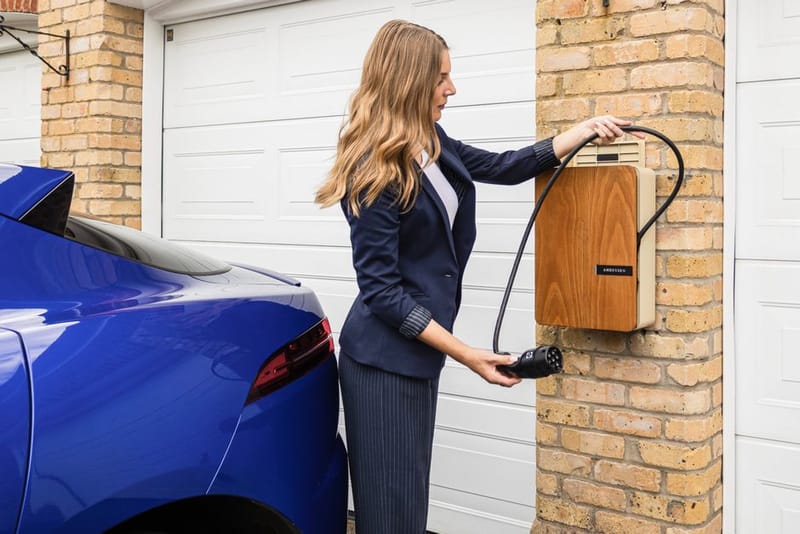
Renault 5 E-Tech home charging is simpler than the spec sheet suggests: on almost every UK home you will charge at 7.4kW, not the headline 11kW, and a single overnight session on a cheap EV tariff costs a few pounds. This guide covers the real charge times, the right charger, what it actually costs, and the Renault 5's standout trick - it is one of the first affordable EVs that can sell power back to the grid.
How fast does the Renault 5 E-Tech charge at home?
The Renault 5 E-Tech comes with an 11kW onboard charger, but that figure is misleading for most UK drivers. Reaching 11kW needs a three-phase electricity supply, which the overwhelming majority of UK homes do not have. On a standard single-phase home supply, the car charges at a maximum of 7.4kW - the same practical ceiling as nearly every other EV on a home wallbox.
At 7.4kW, a full charge of the 52kWh Comfort model takes roughly 8 hours 30 minutes from empty, and the 40kWh Urban model takes around 6 hours 30 minutes. In practice you rarely charge from empty: a typical daily top-up of 15-20kWh lands in two to three hours, comfortably inside any overnight off-peak window. The 40kWh battery covers about 192 miles WLTP and the 52kWh battery about 258 miles, so most drivers charge two or three nights a week, not every night.
Which home charger is best for the Renault 5?
A 7kW smart charger is the right choice for the Renault 5 E-Tech. It matches the car's real-world single-phase charging speed, qualifies for the cheapest EV tariffs, and costs far less to install than a three-phase unit. Look for a charger with native tariff integration so off-peak scheduling is automatic - the Ohme, Zappi and Wallbox Pulsar Plus are the three most popular UK options, and our best home EV charger guide ranks them in full.
The Renault 5 works with all standard Type 2 home chargers, so there is no compatibility catch. If you do not have off-street parking, a wallbox is not an option - see our guide to charging an EV without a driveway for the realistic alternatives. The government's EV chargepoint grant can cut installation costs for eligible flat-dwellers and renters; our installation cost guide breaks down what £1,000-£1,500 buys.
What does it cost to charge the Renault 5 at home?
On a dedicated EV tariff with an off-peak rate of 7.6p/kWh - such as Intelligent Octopus Go as of October 2026 - a full charge of the 52kWh battery costs about £3.95, plus roughly 10% for charging losses, so call it £4.35 from empty to full. That works out at around 1.6p per mile. The 40kWh model is cheaper still per charge at about £3.04.
To put that in context, a 50mpg petrol car at current pump prices costs roughly 12p per mile - so charging the Renault 5 at home off-peak is around seven times cheaper than fuelling a comparable petrol hatchback. The catch is the tariff: charge on a standard variable rate at the 26.32p/kWh price cap (October 2026) and the same full charge costs about £13.70, wiping out most of the saving. Choosing the right tariff matters more than choosing the car. See our best EV tariffs guide for the current ranked options, and cost to charge an EV at home for the full method.
Renault 5 E-Tech charging specifications
- Usable battery (Urban / Comfort)
- 40 kWh / 52 kWh
- WLTP range (Urban / Comfort)
- ~192 mi / ~258 mi
- Onboard AC charger
- 11 kW max (3-phase)
- Single-phase home rate
- 7.4 kW
- Full home charge at 7.4 kW (52 kWh)
- ~8 h 30 m
- Max DC rapid charge
- 101 kW (52 kWh) / 80 kW (40 kWh)
- DC rapid 10-80%
- ~31 min
- Bidirectional (V2G / V2L)
- Yes, up to 11 kW AC / 3.7 kW V2L
Do you need a three-phase 11kW charger?
For almost everyone, no. Three-phase domestic supplies (a connection that delivers power over three live wires instead of one) are rare in UK housing, and upgrading to one costs thousands of pounds and weeks of DNO paperwork. The time saving rarely justifies it: 11kW charging fills the 52kWh battery in about 5 hours 45 minutes versus 8 hours 30 minutes at 7.4kW - a difference that vanishes when you are charging overnight while asleep. We cover the trade-off in detail in 22kW vs 7kW home chargers. Stick with a 7kW unit unless you already have three-phase power for another reason.
How fast is rapid charging on a road trip?
Away from home, the 52kWh Renault 5 peaks at 101kW on a DC rapid charger and completes the 10-80% top-up in about 31 minutes - long enough for a coffee, short enough not to derail a journey. The 40kWh Urban model peaks lower at around 80kW. Neither is class-leading on outright DC speed, but the small battery means you are adding a usable 130-180 miles in half an hour, which is the figure that actually matters on a motorway stop.
Can the Renault 5 do V2G (vehicle-to-grid)?
Yes - and this is the Renault 5 E-Tech's headline trick. It supports bidirectional AC charging up to 11kW, meaning V2G (vehicle-to-grid, where the car exports stored energy back to the grid for payment) and V2L (vehicle-to-load, powering external devices) at up to 3.7kW via a Type 2 adapter. The Renault 5 E-Tech is one of the first mass-market, affordable EVs to offer this, where it has previously been limited to premium models.
The practical catch in 2026 is the ecosystem around it: V2G needs a compatible bidirectional charger and an export-paying tariff, both of which are still emerging in the UK. Done right, V2G can turn a parked car into a small income stream by buying cheap off-peak power and selling it back at peak. Our V2G in the UK 2026 guide covers which chargers, tariffs and cars qualify today, and whether it is worth the premium yet.
Best Renault 5 charging setup for 2026
The cheapest, simplest setup for the Renault 5 E-Tech in 2026 is a 7kW smart charger paired with a dedicated EV tariff. That combination delivers the car's full practical home-charging speed, automates off-peak scheduling, and brings the cost of a mile down to roughly 1.6p. Add a tariff that supports smart or V2G export if you want to push savings further - the Renault 5 is rare in being ready for it at this price. Check your car is on your tariff's supported list first; our Intelligent Octopus Go compatible cars guide explains how the integration works.
Frequently asked questions
How long does the Renault 5 E-Tech take to charge at home?
Can I use the Renault 5's 11kW onboard charger at home?
What does it cost to charge a Renault 5 at home?
Does the Renault 5 E-Tech support vehicle-to-grid (V2G)?
Which home charger is best for the Renault 5?
Best Home EV Charger UK 2026
Best EV Tariffs UK 2026
V2G (Vehicle-to-Grid) UK 2026

22kW vs 7kW Home Charger
Get the cheapest miles from your Renault 5
The right tariff matters more than the car. See the current best EV tariffs.