EV Charger Without a Driveway UK (2026): Your Options
How UK households without a driveway can still charge an EV at home: cross-pavement gulleys, the £500 grant, council schemes, and kerbside chargers.
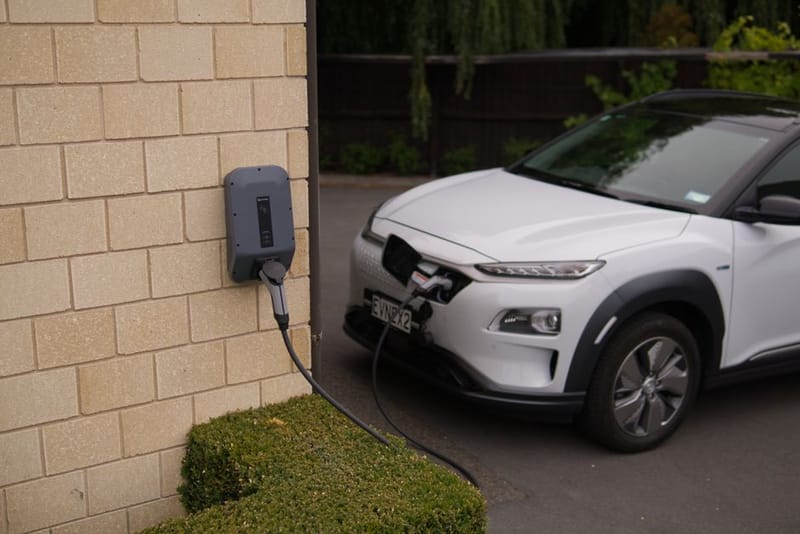
If you own an EV (or want to) but can't park off-street, the conventional home-charging story doesn't apply to you. A wallbox bolted to the side of the house with a cable running across the pavement to your car is illegal in most UK councils - the trailing cable creates a trip hazard the local authority is liable for, and the kerbside parking gives you no guarantee of being next to your own charger anyway. The good news: four real workable options exist in 2026, and the £500 cross-pavement grant from OZEV makes the cheapest of them genuinely affordable.
Why can't you just run a cable across the pavement?
The short answer: local-authority pavement licences almost universally prohibit uncovered trailing cables. The Highways Act 1980 and the Equality Act 2010 sit behind this - pavements are public rights of way that must remain safe and accessible. A cable across an uncovered footway creates a trip hazard, particularly for blind or partially-sighted pedestrians and wheelchair users. If someone trips and is injured, the council that licensed the footway is exposed; if they didn't license it, you are.
What changed in the last two years: councils now have a clear regulatory route to license cross-pavement channels - flush gulleys cut into the pavement that house the cable below the walking surface. The cable becomes invisible once installed and the trip-hazard disappears. Roughly 60 UK councils now have a stated process for granting cross-pavement licences (the list grows monthly); checking your council's website for an "EV cross-pavement" or "on-street EV charging" page is the right first step.
Are cross-pavement cable channels the right option?
This is the cheapest workable home-charging option for terraced and end-of-terrace houses with on-street parking. The principle: a shallow trench is cut across the width of the pavement (typically 1.5-2.5 metres), a sealed channel is laid flush with the surface, and your wallbox cable runs through it to a kerbside outlet box. The pavement is reinstated to council spec on completion.
Three main suppliers operate in the UK in 2026:
Charge Gully (Oxfordshire-based) - the longest-established UK installer. Typical end-to-end installation is £900-1,400 before the grant, with most quotes around £1,100. Channel design is fully recessed with rubber wiper seal.
Gul-e (Oxford City Council partnership) - originally piloted in Oxford in 2023, now nationally available. Typical installation £900-1,300. Council-partnership pricing in pilot areas can drop to £650-800.
Kerbo Charge - newer entrant focused on streamlined council-approval workflow. Quotes typically £750-1,200. Includes the cable retraction mechanism that pulls the cable back into the gully when not in use.
All three products are designed to comply with the typical council licensing template, and most will handle the licence application as part of the install quote. The £500 cross-pavement grant from OZEV (Office for Zero Emission Vehicles) applies on top, pulling typical out-of-pocket cost to £400-900. You still need a wallbox - budget another £600-900 for that plus its installation.
Should you wait for a council-led on-street scheme?
A small but growing number of councils run their own cross-pavement programmes that streamline the licensing and sometimes subsidise installation directly. Surrey County Council, Oxfordshire County Council, and Lambeth Council are the three most established as of mid-2026; Hounslow, Camden, and several Manchester boroughs are piloting similar schemes.
The pattern is broadly consistent. The council partners with one or two approved gully suppliers (often the three above), sets a fixed price for residents in eligible streets, and handles the licensing centrally rather than per-property. Total cost in council pilot areas typically falls in the £600-900 range, before the OZEV grant - so out-of-pocket can be as low as £150-400.
The catch: scheme availability is geographic. Check your council's website for an EV scheme page, or call the highways team directly. If your council doesn't run one, lobby for it - cross-pavement schemes are the single highest-impact action a local authority can take on EV adoption for non-driveway households.
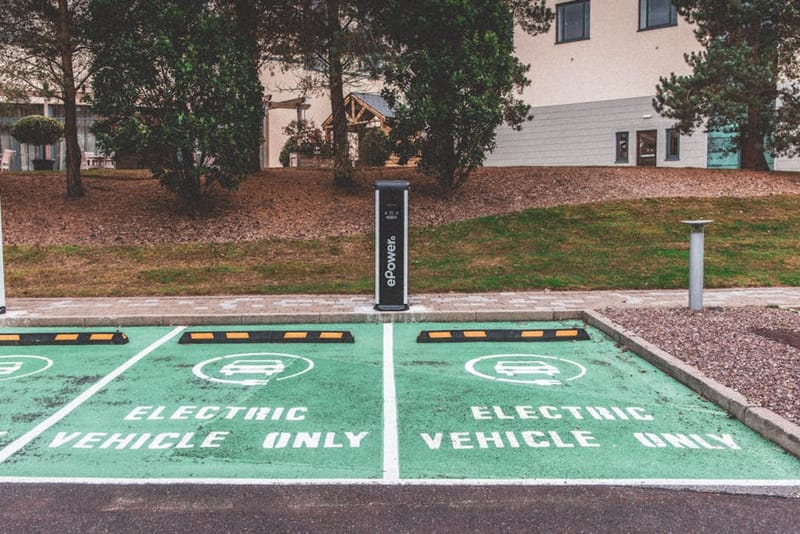
If a cross-pavement channel won't work (the pavement is too narrow, your street is conservation-protected, or parking is genuinely random), shared kerbside chargers are the next-best path. Two providers dominate the UK on-street market:
Connected Kerb - dedicated low-power (typically 3.6-7 kW) bollard chargers installed at kerbside in residential streets. Funded by council partnership; users pay 30-45p/kWh via the Connected Kerb app. UK installed base ~2,500 sockets and growing.
ubitricity (Shell) - chargers built into existing street lampposts. Up to 5 kW per socket. Lower install footprint than dedicated bollards. UK installed base ~6,000+ sockets, primarily in London.
Both are typically slower than the 7 kW wallbox you'd install at home, but if you charge overnight that doesn't matter - 8 hours at 5 kW is 40 kWh, comfortably enough for an average UK weekly mileage. The cost-per-kWh is higher than the cheapest overnight home tariffs (typically 6-9p/kWh at home vs 30-45p/kWh on Connected Kerb), so the economics only work if you can't install a home charger. Public-charger users on average pay 3-5x the home electricity rate, so factor that into the longer-term cost comparison.
Can workplace and public DC charging fill the gap?
For some non-driveway EV owners, the home-charging question never gets solved - they rely on workplace charging plus occasional public-DC top-ups instead. If your employer offers free or subsidised charging (the Workplace Charging Scheme subsidises this for employers), and you live close enough to a public-DC site for weekend top-ups, you can sidestep the home-charging problem entirely.
This works best for low-mileage drivers (under 8,000 miles/year) and people whose work routine reliably includes a daytime parking slot at a charging-equipped workplace. It's a worse solution than home charging for cost and convenience, but it's the only realistic path for tower-block residents and renters whose landlord won't engage with a cross-pavement installation.
How do you decide between the four options?
Confirm you can park within ~3 metres of your house
Cross-pavement channels assume the kerbside parking spot is directly outside your front door. If parking is unrestricted-but-distant, the gully is the wrong tool - you'd be running a long extension and the cable can't reach the channel reliably.
Check your council's cross-pavement page
Search ' EV cross-pavement' or ' on-street EV charging'. If they run a scheme, that's the cheapest path. If they don't, Charge Gully or Gul-e installs will go through the standard licence process at standard cost.
Confirm wallbox vs kerbside cost-per-kWh delta
A home wallbox + cross-pavement channel costs around £1,500-2,000 total but charges at 6-9p/kWh on a good overnight tariff. Kerbside Connected Kerb is zero setup cost but 30-45p/kWh ongoing. If you drive 8,000+ miles/year the home installation pays back inside 2-3 years.
If you rent, ask the landlord BEFORE buying the EV
Cross-pavement installations require the freeholder's consent. Many landlords are receptive (the landlord grant covers up to £350 per socket), but a few refuse. Confirm this in writing before committing to an EV purchase if you're a renter.
Don't run an uncovered cable across the pavement
This is the option that doesn't work. Beyond the legal exposure, if a pedestrian trips your insurance won't cover the claim because the cable was uncovered without a pavement licence. The £500 OZEV grant + cross-pavement channel is the legitimate route.
Frequently asked questions
Can I get an EV charger if I don't have a driveway?
Is it legal to run an EV cable across the pavement?
How much does a cross-pavement EV charging gully cost?
Is the £500 cross-pavement grant still available?
Can renters get a cross-pavement EV charger installed?

Cross-Pavement Charging Grant: Who Qualifies for £500
EV Chargepoint Grant UK 2026
Best EV Tariffs UK 2026