Kia EV6 Home Charging UK 2026: Chargers, Tariffs and V2L
What home charger and tariff work best with a Kia EV6 in the UK: 7.2kW AC limits, 3-phase options, V2L use, and the Intelligent Octopus Go maths.
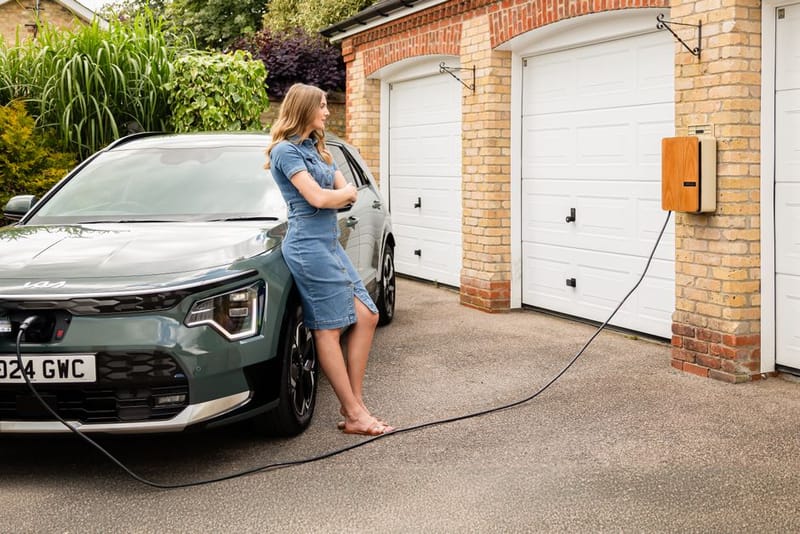
How fast does the Kia EV6 charge at home?
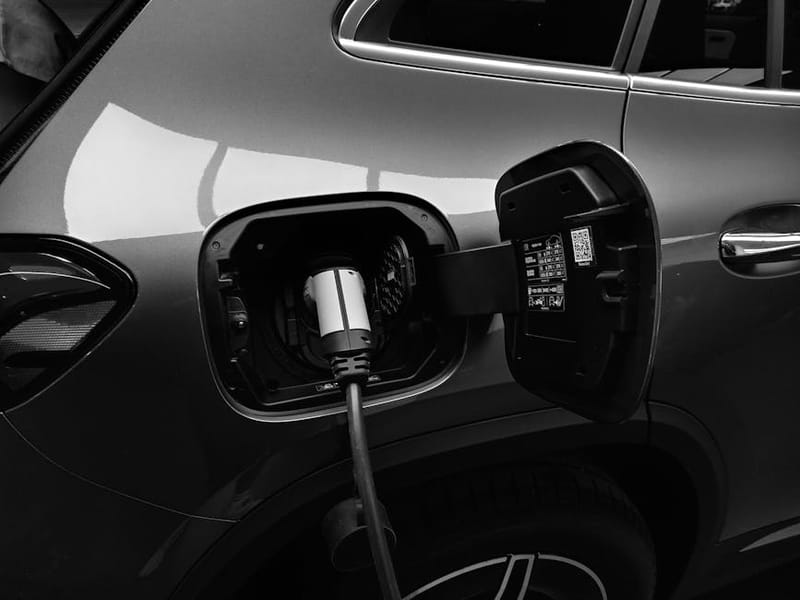
A UK home charger on a single-phase supply tops out at 7.4kW. The Kia EV6 (a 2021-onward electric crossover from Hyundai Motor Group) accepts up to 7.2kW on its standard onboard charger (OBC), so the car - not the charger - is the cap. In practice every 7kW home unit on the market delivers the same speed when paired with an EV6.
The arithmetic is straightforward. The EV6 standard-range battery is 58kWh usable; the long-range model - by far the more common UK trim - is 77.4kWh usable. A 2024 facelift introduced an 84kWh pack on Air, GT-Line and GT-Line S models. Charging speeds and times under each scenario:
- 10% → 100% on 77.4kWh @ 7.2kW: about 9 hours 40 minutes.
- 0% → 100% on 77.4kWh @ 7.2kW: about 10 hours 45 minutes.
- 20% → 80% (the realistic daily cycle) on 77.4kWh @ 7.2kW: about 6 hours 30 minutes.
- 20% → 80% on the 84kWh facelift @ 7.2kW: about 7 hours.
For most UK drivers, the daily 20→80% top-up fits inside an overnight smart tariff window - but only just. Full-to-empty charges spill out of the cheap window unless you start the schedule early or have a higher-power charger.
Which home chargers work best with the Kia EV6?
Every 7kW wall box on the UK market will charge an EV6, so the choice comes down to tariff integration, app quality, and warranty. The two combinations worth thinking about up front:
Ohme Home Pro for Intelligent Octopus Go
The Ohme Home Pro has the deepest integration of any UK charger with Intelligent Octopus Go. Once enrolled, Octopus controls the schedule - you set a target charge time in the Octopus app, and the charger only powers up during the platform's off-peak windows. The EV6 is one of the cars that works via the charger route on IOG, which is more reliable than the vehicle-API route Octopus also offers for some Hyundai/Kia models.
Pod Point Solo 3S for OVO Charge Anytime
The Pod Point Solo 3S is the natural pairing if you'd rather use OVO Charge Anytime - a flat 13.33p/kWh PAYG credit rate (as of October 2026; monthly plans also available) applied to any EV charging session, regardless of clock time. Pod Point's app handles the EV6 specifically (it was an early supported model) and the 5-year warranty is the longest in the mainstream UK market.
Charger-agnostic alternatives
If you want to keep tariff options open, the Hypervolt Home 3 Pro and Easee One are both well-reviewed UK-fitted units that work with the EV6's charging-port handshake without issues. The trade-off is you'll typically lose the smartest scheduling features compared to the IOG-Ohme or Anytime-Pod Point combinations.
What EV tariff suits the Kia EV6 best?
Three tariffs cover the majority of EV6 owners, and the right pick depends mostly on how many kWh you draw per night. See the full UK EV-tariff comparison for context - the short version below.
Intelligent Octopus Go (7.6p off-peak)
IOG is one of the cheapest mainstream EV tariffs and the most likely default for EV6 owners. The catch is the smart schedule's 6-hour cheap-rate cap: Octopus chooses when within an extended overnight window your charge runs, but on most schedules the cheap-rate slot is capped at 6 hours at 7.6p (October 2026), beyond which extra charging falls onto the standard rate. At 7.2kW × 6h, that is about 43kWh per night - enough for a 20→80% top-up on the 77.4kWh EV6 but not enough for a 0→100% charge in a single window.
OVO Charge Anytime (13.33p PAYG, any time)
OVO Charge Anytime removes the time-of-use complexity - you pay your normal OVO unit rate, and OVO credits the difference down to 13.33p/kWh (PAYG, as of October 2026) on any EV charging session, including daytime sessions paired with solar. This is the better tariff for EV6 owners who can't always shift charges to overnight, or who regularly drain more than 43kWh in a session.
EDF GoElectric (6.66p off-peak)
EDF GoElectric is the longer-window alternative - 7 hours (11pm-6am) at 6.66p/kWh off-peak (as of October 2026). For households that have already optimised for non-Octopus suppliers, GoElectric's wider cheap window (no smart-scheduling complexity) can suit the EV6 better than IOG, particularly when paired with a 22kW three-phase charger.
How does V2L work on the Kia EV6?
The EV6's Vehicle-to-Load (V2L) feature is standard on every UK trim. It exports up to 1.9kW (10A continuous) from the traction battery via two paths:
- In-cabin socket: a UK three-pin domestic socket under the rear bench (accessed by tipping the seat base forward). Powered whenever the car is set to V2L mode via the in-car menu.
- External port adapter: a dongle that plugs into the car's CCS Type 2 port and exposes a three-pin domestic socket. Useful for high-draw appliances or running a long extension lead.
1.9kW is enough to run a kettle (~2kW peak - borderline), a fridge-freezer plus a few lights, a domestic Wi-Fi router and TV, or to slow-charge a second EV at granny-cable speeds. It is not enough to power a full house off-grid; for that you'd need a home battery + solar setup and a vehicle-to-home (V2H) compatible inverter, neither of which the EV6 currently supports in the UK.
The practical use cases UK owners hit: powering tools at a remote site, keeping the freezer running during a power cut, and (the most-cited) running a kettle and lights on campsites without a hookup. The car will pull V2L down to a configurable state-of-charge limit (default 20%) before cutting out, so you can't accidentally strand yourself.
Should you upgrade to a 22kW three-phase charger?
The EV6 supports up to 11kW AC charging when the optional three-phase onboard charger is fitted - but this is a factory option that has rarely been specced on UK cars, because UK domestic electricity supply is almost universally single-phase. See our 3-phase vs single-phase home charging guide for the underlying decision.
For most EV6 owners on a single-phase supply, a 22kW charger charges your car at exactly the same speed as a 7kW unit (7.2kW), because the car's onboard charger is the limit. The £200–£500 premium for the 22kW hardware only pays back if:
- Your home has (or is upgrading to) a three-phase supply, and
- Your EV6 was specced with the 11kW onboard charger, and
- You'd benefit from cutting full-charge times from ~11 hours to ~7 hours.
For the vast majority of UK EV6 owners, a 7kW single-phase unit is the right call. Spend the difference on the right tariff instead - the recurring saving is the larger long-run number. (Homeowners with off-street parking are not eligible for the £500 EV Chargepoint Grant, so the full hardware cost falls on you.)
Frequently asked questions
Does the Kia EV6 charge faster than 7.2kW at home?
Is the Kia EV6 compatible with Intelligent Octopus Go?
How much does a full charge cost at home?
Will the V2L socket trip my home circuit?
Can you charge a Kia EV6 from a standard three-pin plug?
Does the 2024 EV6 facelift change home charging?
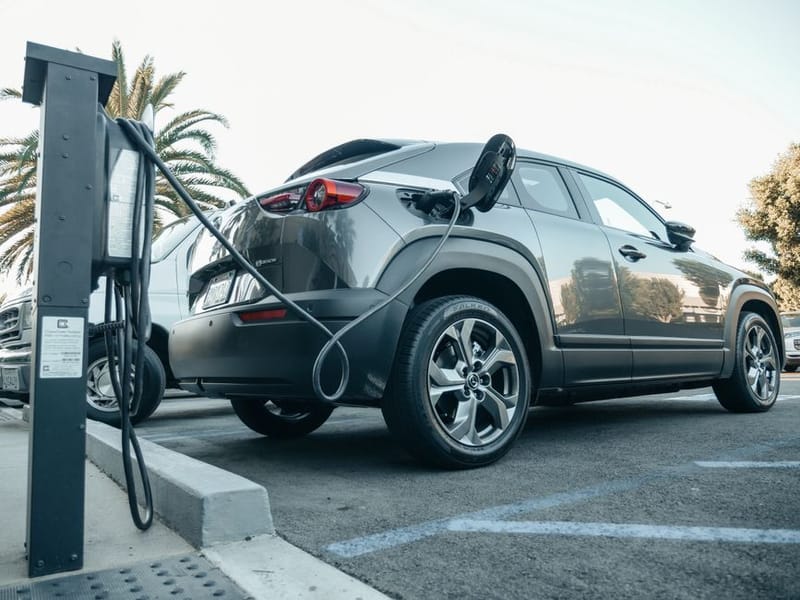
Best Home EV Charger UK 2026
Best EV Tariffs UK 2026
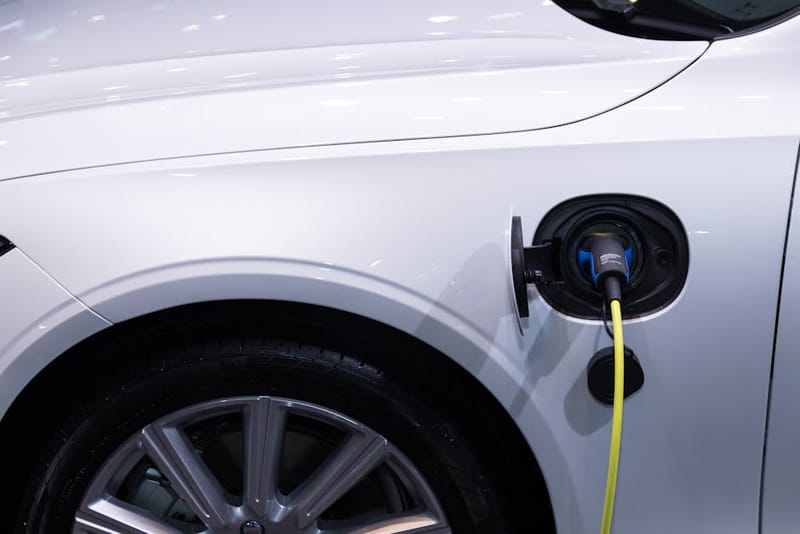
Intelligent Octopus Go Compatible Cars
How Much Does It Cost to Charge an EV at Home?
Find the cheapest tariff for your EV6
The biggest lever on EV running cost is the tariff, not the hardware. Our 2026 comparison covers every active UK EV tariff with postcode-aware unit-rate data.