BYD Atto 3 Home Charging UK 2026: Tariff and Charger Picks
BYD Atto 3 UK home charging 2026: best tariff (Intelligent Octopus Go), best charger (Ohme ePod / Easee One), £500-£800 saving.
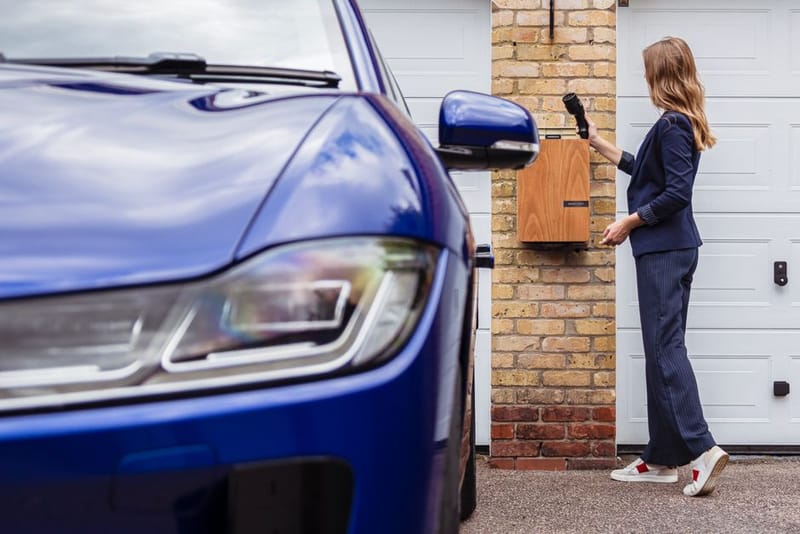
The BYD Atto 3 has quietly become one of the UK's most popular value-tier EVs in 2026 - solid range (~260 miles WLTP), good build quality, and a price point that undercuts much of the competition. If you have just bought or are considering one, home charging is where you save the most money over the car's life.
This guide covers the tariff choice, the charger choice, and the specific quirks of the Atto 3's charging setup for UK households on single-phase supplies.
Which UK tariff is best for a BYD Atto 3?
Intelligent Octopus Go, for the same reasons it wins for most non-Tesla UK EVs. The cheap-rate window is 23:30-05:30 (a generous 6 hours) at 7.6p/kWh as of October 2026, and Octopus's smart-charging system can talk to the charger to do the scheduling automatically.
OVO Charge Anytime (13.33p/kWh PAYG as of October 2026) suits drivers who can't commit to a fixed overnight window, but it costs more per kWh. EDF GoElectric at 6.66p/kWh undercuts Octopus on headline rate, with a longer 7-hour window (11pm-6am). Standard Octopus Go (a 5-hour window at 8.21p/kWh as of October 2026) is still available but Intelligent Octopus Go is strictly better.
One thing to note: the Atto 3 itself does not have native integration with any tariff (Tesla is the exception in this regard). The scheduling happens at the charger or via the charger's app, not via the car. This affects which charger to pick.
Which home charger should you install?
Two strong picks for the Atto 3 in 2026.
Ohme ePod (£700 installed) - the smart-tariff specialist. Covers all four major UK time-of-use tariffs natively (Octopus Intelligent Go, EDF GoElectric, OVO Charge Anytime, plus Intelligent Octopus Flux for solar households). If you might switch tariffs in the next few years, Ohme is the most flexible long-term choice.
Easee One (£600 installed) - the value pick with the best app. Smaller physical footprint, polished iOS / Android app, supports Octopus Intelligent Go and EDF GoElectric natively. £100 cheaper than Ohme and the install is arguably tidier.
Both are socket-only (Type 2 outlet on the wall). You will need a Type 2 cable - the Atto 3 ships with a basic 'granny' cable but for home use you want a proper 5m or 7.5m Type 2 cable (~£100-£150 separately). Most UK Atto 3 buyers add this to the charger order.
Avoid: Tesla Wall Connector (Tesla-only, no Atto 3 compatibility). Avoid: cheap unbranded chargers - the few pounds saved is not worth the day-2 reliability risk.
Is 7 kW enough, or should I look at 22 kW?
7 kW is enough. The BYD Atto 3 has a 7 kW onboard AC charger, which matches UK single-phase home supplies perfectly. Even if your home supports 22 kW (rare in the UK - most homes are single-phase 7.4 kW max), the car cannot accept faster AC charging.
For DC fast charging (public networks), the Atto 3 supports up to 88 kW. That is materially slower than the latest EVs but enough for sensible long-distance trips: a 20-80% charge takes around 45 minutes at a properly-capable DC charger.
For everyday home use, the 7 kW home charge fills an empty Atto 3 battery in about 9 hours overnight. On Intelligent Octopus Go's 6-hour cheap window, you can add roughly 280 miles of range per night - more than enough for the average UK driver.
What is the realistic annual saving?
For an average UK Atto 3 driver doing 10,000 miles per year (Atto 3 efficiency ~3.4 mi/kWh = ~2,940 kWh annually):
- vs flat-rate electricity at the 26.32p/kWh price cap (October 2026): 2,940 kWh × 26.32p = £774 vs 2,940 × 7.6p = £223. Annual saving: ~£551.
- vs public fast charging at 65p/kWh average: 2,940 kWh × 65p = £1,911 vs 2,940 × 7.6p = £223. Annual saving: ~£1,688.
- vs Octopus Tracker (variable but typically 18-22p/kWh): 2,940 × 20p = £588 vs 2,940 × 7.6p = £223. Annual saving: ~£365.
The charger pays back within 12-18 months from these savings alone. The smart-tariff switch (moving from flat to Intelligent Octopus Go) is the bigger lever than the charger choice - so the order of operations is: get a smart meter installed, switch to Intelligent Octopus Go, then install a home charger.
Solar PV and the BYD Atto 3
If you have solar PV, the picture shifts slightly toward Myenergi Zappi v2 (~£900 installed) instead of Ohme or Easee. Zappi's Eco+ mode is the strongest solar-only charging implementation on the UK market - it tracks solar surplus and modulates charging to use it. For Atto 3 owners with a 6-8 kW PV array, this can mean materially more of your charging coming from free solar rather than imported electricity.
The £200-£300 premium over Ohme or Easee pays back over 18-24 months in extra solar self-consumption. If you do not have solar PV, the Zappi's main feature is wasted - stick with Ohme or Easee.
BYD-specific gotchas
Three things UK BYD Atto 3 owners commonly run into.
- The BYD app is functional but limited. Unlike Tesla, the BYD app does not directly integrate with smart tariffs. All scheduling happens at the charger, not the car. This is fine - the charger's app does the work - but worth knowing if you came from a Tesla.
- Battery preconditioning is manual. Other EVs auto-precondition for fast-charge stops; the Atto 3 needs you to set it manually in the BYD app before arriving at a DC charger. Without preconditioning, the 88 kW peak rate drops substantially in winter.
- Public DC charging via CCS, not Tesla. The Atto 3 uses CCS for fast charging. The Tesla Supercharger network is mostly CCS-open in the UK now (see our public charging guide) so this is no longer the limitation it was in 2024.
Frequently asked questions
Can I use a Tesla Wall Connector with the BYD Atto 3?
How long does a full charge take at home?
Do I need to schedule charging via the BYD app or the charger app?
Is the BYD Atto 3 worth the OZEV chargepoint grant?
What is the realistic UK range?
Does the BYD Atto 3 support V2G (vehicle-to-grid)?
No. The Atto 3 is one-way only. For V2G you need a different model (Nissan Leaf, Kia EV6 / EV9, Hyundai Ioniq 5/6, MG ZS EV in the UK). See our V2G guide for the full compatible list.