V2H (Vehicle-to-Home) Explained UK 2026
V2H (Vehicle-to-Home) explained UK 2026: how your EV becomes a backup battery, peak-rate offsetting, compatible EVs and chargers, install costs.
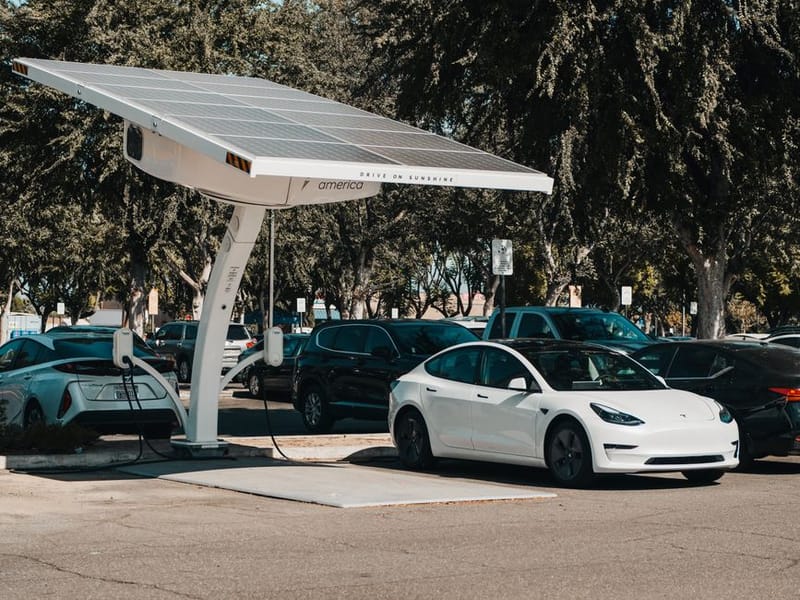
V2H (Vehicle-to-Home) is one of the practical applications of bidirectional EV charging in the UK in 2026. While V2G (Vehicle-to-Grid) focuses on grid export income, V2H focuses on using your EV battery as a household energy buffer - either as outage backup or as peak-rate cost reduction. This guide covers how UK V2H actually works, the install requirements, when it makes financial sense, and the practical limitations.
What is V2H?
V2H (Vehicle-to-Home) is bidirectional EV charging where the EV battery powers part or all of your home's electricity needs. Two practical applications:
- Outage backup. When the grid fails (power cut), V2H switches to providing electricity from your EV battery. Your house keeps running during the outage; the EV battery is your backup source.
- Peak-rate cost reduction. Charge the EV during cheap-rate windows (overnight at 7.6p/kWh on Intelligent Octopus Go as of October 2026); use that cheap energy during peak-rate windows (around 35-39p/kWh on IOG in the early evening). Save the price difference on the energy you consume during peak hours.
Both applications use the same hardware setup. The difference is timing - outage backup is rare and reactive; peak-rate reduction is daily and proactive.
What's the difference between V2H and V2G?
V2H and V2G are both bidirectional charging modes but with different destinations:
- V2H (Vehicle-to-Home): EV battery powers your home. Energy stays within the house's electrical system. No interaction with the grid.
- V2G (Vehicle-to-Grid): EV battery exports back to the grid. Energy flows back into the public electricity network. Requires special V2G tariffs (Octopus Power Pack, Octopus Flux) and DNO connection paperwork.
Most bidirectional UK home charger setups (Wallbox Quasar 2) support both modes. The home chooses which mode runs at which time:
- Power outage → V2H (backup the home)
- Peak rate hours → V2H (offset peak rates)
- V2G tariff peak windows → V2G (export to grid for income)
- Off-peak (cheap rate) → standard charging from grid
What hardware do you need for V2H?
UK V2H setup requires three components:
- Bidirectional EV charger. Currently the Wallbox Quasar 2 is the only widely-available UK V2H-certified home charger. £5500-£7500 fully installed. See our Wallbox Quasar 2 review.
- V2H-capable EV. The EV must support bidirectional discharge from its battery. Current UK options: Nissan Leaf (2018+), Kia EV6 (2024+ specific trims), BYD ATTO 3 (2024+), MG4 Long Range (2024+). Hyundai IONIQ 5/6 and Polestar 2/3 firmware updates pending.
- Home energy management system (often optional). Some V2H setups use Home Assistant or commercial home energy management to coordinate when V2H kicks in. Optional but useful for peak-rate optimisation.
Total hardware investment for a UK V2H setup starting from scratch: £5500-£7500 (excluding the EV cost, which you'd buy anyway).
How much can V2H save you?
UK V2H savings depend on your usage pattern and electricity tariff:
- Peak-rate offsetting (typical UK household): Using V2H to cover ~5 kWh per evening peak hours (16:00-19:00) at the difference between cheap rate (7.6p/kWh) and peak rate (around 37p/kWh on Intelligent Octopus Go, October 2026) saves ~£1.45 per day = ~£450-£550 per year.
- Solar PV + V2H combination: Using V2H to time-shift solar generation through to evening peak rates can save another ~£100-£200 per year for households with home solar.
- Outage resilience (hard to quantify in pure £): For households experiencing 2-4 power outages per year, V2H means your fridge stays cold, your heating keeps running, your work-from-home setup keeps running. Worth £200-£500/year in convenience value.
- Total typical UK V2H annual benefit: £300-£800 per year for typical setups; £500-£1200 for solar + V2H + active peak-rate optimisation.
The pure financial payback period for the Wallbox Quasar 2 from V2H alone: 7-15+ years. Adding V2G income (via Octopus Flux) brings the combined payback to 5-10 years. For most UK households, V2H makes financial sense only when combined with outage resilience priorities or future-proofing motivations.
Who should consider V2H?
Three UK household types where V2H makes sense in 2026:
- Households experiencing regular power outages. Rural UK areas with overhead power lines, areas with infrastructure issues, or households with critical electricity needs (working from home, medical equipment, etc.). V2H is meaningful outage insurance.
- Households with home solar PV. V2H lets you time-shift surplus solar generation through to evening peak rates - capturing more value from your solar investment.
- Households on time-of-use tariffs with high peak rates. The bigger the gap between off-peak and peak rates (Intelligent Octopus Go as of October 2026: 7.6p vs around 35-39p), the better the V2H peak-rate offsetting maths.
Three UK household types where V2H is wrong in 2026:
- Households with flat-rate electricity. No peak-vs-cheap-rate gap to exploit; V2H peak-offsetting saves nothing.
- Households without V2G-capable EVs. Hardware investment doesn't unlock without the right EV.
- Households planning to upgrade to cheaper V2G tech in 2027-2028. Wait if the hardware costs are off-putting.
Frequently asked questions
Is V2H legal in the UK?
Can V2H damage my EV battery?
Can I retrofit V2H to my existing home charger?
Does V2H work during a power cut automatically?
Can my V2H setup power my entire house?
What's the difference between V2H and a home battery (like Tesla Powerwall)?
The bottom line
For UK households in 2026 considering V2H, the practical recommendation is: it's a credible technology with real benefits but only makes sense in specific circumstances. Worth considering for: households with regular power outages, home solar PV setups, or genuine value placed on future-proofing. Not worth considering for: flat-rate electricity households, those without V2G-capable EVs, or households waiting for cheaper 2027-2028 V2G hardware.
The £5500-£7500 Wallbox Quasar 2 investment is the dominant cost. UK V2H financial payback from V2H alone is 7-15+ years; adding V2G via Octopus Flux brings combined payback to 5-10 years. For households who specifically value the technology and outage resilience, the investment makes sense even with longer payback periods.
For deeper coverage of the Wallbox Quasar 2 hardware, see our Wallbox Quasar 2 review. For V2G tariff context, see our Intelligent Octopus Go vs Flux comparison. Octopus Energy publishes current Flux tariff terms.