EV Winter Charging in the UK: A 2026 Guide
How UK winter affects EV charging in 2026: battery preconditioning, off-peak window planning, real range loss in cold and how to budget for it.
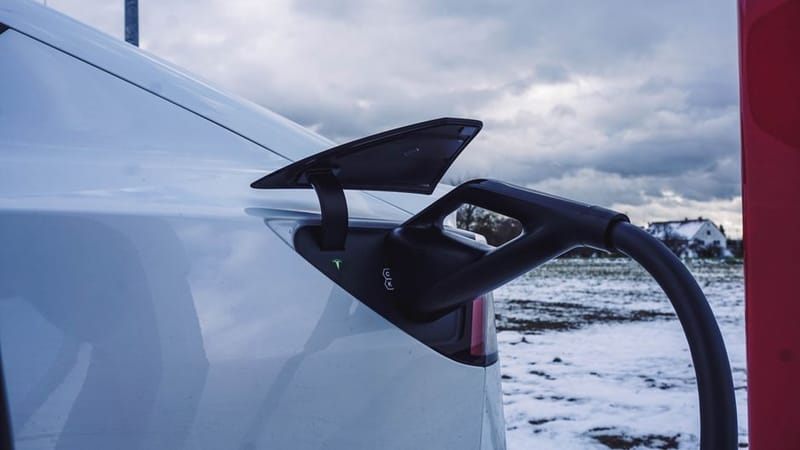
UK winters aren't Norwegian winters, but they're cold enough + wet enough to chip noticeably away at an EV's real-world range and charging speed. For a driver new to the cold-weather side of ownership, the first January with an EV can come as a shock: instant-display range drops, rapid charging takes longer, and the off-peak window that handled summer commuting comfortably suddenly doesn't quite get you back to 100%.
None of this is a problem if you plan for it. Here's what actually happens to a UK EV in winter, what you can do about it, and what the cost impact looks like on an off-peak tariff.
How much range you actually lose
Real-world UK winter range loss for most modern EVs lands in the 15-25% range vs WLTP. The bigger the gap between WLTP and summer real-world numbers, the smaller the proportional winter hit feels (because you already calibrated to a discounted expectation). The variables that drive it:
- Cabin heating is the single biggest draw. A resistive heater can pull 3-5 kW continuously to warm a cold interior; a heat pump (standard on most 2024+ EVs) cuts that to roughly 1-2 kW once the cabin's up to temperature.
- Battery chemistry temperature. Lithium-ion cells deliver less energy at low temperatures + accept charge slower. A 50 kWh usable pack at -2 deg C might effectively act like a 42-44 kWh pack until it warms up.
- Rolling resistance. Cold + wet tarmac + winter tyres (if fitted) all add drag.
- Headwinds + denser cold air. Adds 3-5% on a windy motorway day.
For a Tesla Model 3 Long Range (WLTP 390 mi), expect winter real-world around 220-260 mi at motorway speeds. For a Kia EV6 (WLTP 328 mi), expect 200-230 mi. For a BYD Atto 3 (WLTP 260 mi), expect 160-185 mi.
Battery preconditioning: what it actually does
Preconditioning is the warming of the battery pack before a rapid charge, so the cells are at the temperature where they accept maximum current. Without it, a winter rapid charge can easily take 50-70% longer than the same charge in summer.
How to trigger it varies by manufacturer:
- Tesla: navigate to a Supercharger via the in-car nav. The car begins preconditioning when it estimates you're 15-30 min out. Manual override via the touchscreen 'Schedule' menu also works.
- BYD (Atto 3, Seal, Dolphin): 2025 software update added 'Battery Preheat' button in the Climate menu - manual trigger only, 10-15 min warm-up time.
- Hyundai / Kia: 'Winter Mode' button in some trims; nav-to-charger triggering on Ioniq 5/6 + EV6 with compatible firmware. Check your specific software version.
- VW ID range: automatic when navigating to a compatible CCS rapid charger via the in-car nav with the latest software. Manual trigger only via We Connect app on some earlier versions.
If your car doesn't support preconditioning, the workaround is to stop somewhere brief (10-15 min motorway services break) before the rapid charge - the warm motorway speed warms the pack a few degrees by itself. Not as effective as proper preconditioning but better than rolling in stone-cold.
Off-peak windows in winter: the planning bit
Most UK off-peak EV tariffs in 2026 offer windows of 5-7 hours (Octopus Go 00:30-05:30, Intelligent Octopus Go 23:30-05:30 plus smart slots, Ovo Drive 00:00-04:00 + smart extension). In summer these windows easily handle a full 0-100% charge on most domestic 7.4 kW chargers.
In winter, two things eat into that headroom:
- The first hour or so is partly battery warming, not driving useful energy into the cells. A cold pack at -1 deg C will warm itself before accepting full 7.4 kW - meaning you might only get 5-6 kWh useful in the first hour, not 7.4 kWh.
- Range loss means you need MORE kWh per night to cover the same driving. A commute that drew 8 kWh in summer might draw 10-11 kWh in winter.
The practical effect: a 60 kWh battery starting at 30% on a 23:30-05:30 window might finish at 95% in summer and 80% in February. If that's not enough for the next day's driving, your options are:
- Use the scheduled-charge feature in your app to start the session BEFORE off-peak when the battery is warmer (some peak kWh, but full charging speed from minute one).
- Pre-warm the battery during off-peak via the car's app (Tesla 'Departure Time' feature, etc.). The pack uses some off-peak energy to warm itself + then accepts charge faster.
- Switch to Intelligent Octopus or another smart-extension tariff that runs your charger into the cheap hours regardless of strict window timing.
- Accept it + top up at the workplace or public on the days you need a longer range than the overnight delivered.
Cost impact on a typical off-peak tariff
Worked example for an Octopus Go customer at October 2026 rates (8.21p off-peak, around 29p peak, average 8000 mi/year EV):
- Summer cost (1 Apr - 30 Sep, ~3.5 mi/kWh real-world): ~£94 fuel cost across 6 months on a fully off-peak charging routine.
- Winter cost (1 Oct - 31 Mar, ~2.7 mi/kWh real-world): ~£122 if you stay fully off-peak; ~£183 if winter range loss forces ~20% of charging onto the peak rate (more if it goes to a public rapid, typically 55-79p/kWh).
Total annual difference: roughly £30-£90 more in winter, depending on how disciplined you stay with off-peak scheduling. For context, the same 8000 mi in a 50 mpg petrol car at 150p/L would cost ~£1,050/year - so even the worst-case winter EV year still saves £750+ on fuel.
Cold-soak: when a car sits outside overnight
If your EV sits on a driveway or street in genuinely cold air (-2 deg C or below) for 8+ hours, the battery pack drops to ambient. Schedule overnight charging to FINISH around the time you'll leave, not at midnight - the pack stays slightly warm from the charging itself + you don't lose hours of cold-soak before the morning commute.
Tesla's 'Departure Time', BYD's 'Scheduled Charging', and Octopus Intelligent's algorithm all support this kind of finish-time scheduling. The energy cost is the same; the difference is which kWh on the battery you actually get to use after a cold night.
For street-parked EVs without a home charger, the cold-soak problem is harder. Workplace charging during the working day (when the car's been driven a bit + the pack's warmer) tends to give better speed than a 7am rapid stop on a stone-cold battery.
Heat pumps: worth the upgrade?
If you're shopping for a new or used EV in 2026 + winter range matters, check whether the car has a heat pump. Most 2024+ models include one as standard; some 2020-2023 models had it as an optional extra (Tesla Model 3 standard from 2021, Kia EV6 standard, VW ID range optional on early units).
The difference is real: a heat pump cuts cabin-heating energy draw by roughly half once the cabin is at temperature. That translates to 5-10% more real-world winter range for around-town driving where the cabin heater runs continuously. On a long motorway run where you're moving fast enough that drag dominates, the heat-pump advantage is smaller.
The bottom line
Winter EV ownership in the UK is a planning problem more than a cost problem. Range loss is real (budget 15-25%), rapid charging needs preconditioning to stay quick, and off-peak overnight windows leave less headroom than they do in summer. Once you've adjusted scheduling + heating habits, the annual winter premium on an off-peak tariff is in the £30-£90 range for a typical driver - small against the £750+ annual saving vs petrol.
The driver who struggles in their first winter is usually the one who hasn't enabled preconditioning, doesn't schedule charging finish time, and ignores the cabin heater draw. The driver who's been through one winter just gets on with it.