EV Charging at Holiday Cottage / Airbnb UK 2026
EV holiday charging UK 2026: trip planning, charge-friendly Airbnb / cottages, reciprocal networks, pay-per-charge options.
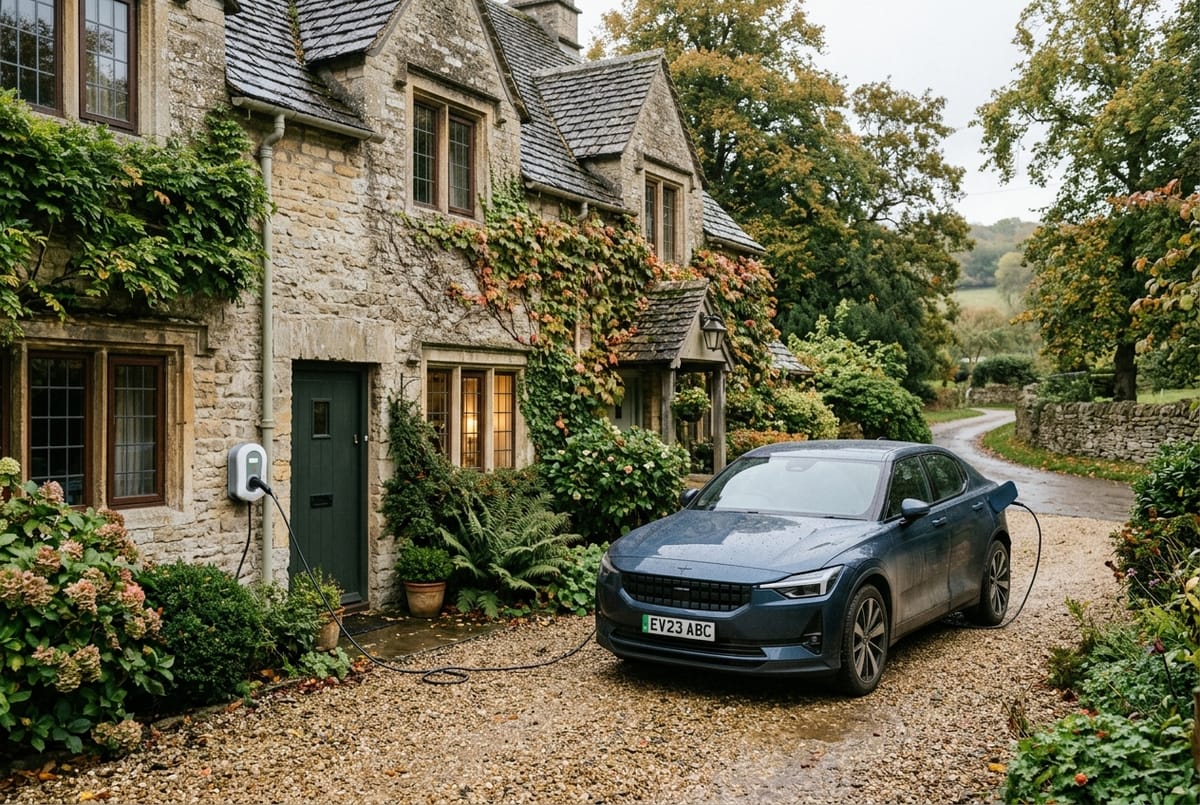
UK EV holiday trips work increasingly well in 2026 but require some pre-trip planning. This guide covers the platforms + strategies that make it seamless.
UK holiday let EV charging landscape 2026
Where the market is.
Charger-installed holiday lets (Q1 2026 estimates):
- ~25% of UK holiday lets have on-site EV charger.
- Higher in tourism-heavy areas: Cornwall, Cotswolds, Lake District (~35-45%).
- Lower in rural Scotland / Northern Ireland / Wales (~10-20%).
Trends driving uptake:
- Holiday-let owners installing for property-value increase + guest appeal.
- EV Chargepoint Grant for landlords (up to GBP 350/socket).
- Booking-platform algorithms prioritising EV-amenity listings.
- Growing UK EV adoption (~25% of new cars 2026).
Property types most/least likely to have chargers:
- Most likely: modern holiday cottages, premium properties, branded networks (English Country Cottages, Sykes Cottages premium tier).
- Least likely: historic Listed properties (planning restrictions), basic budget rentals, off-grid rural cottages.
Booking strategy - finding EV-friendly stays
Where to search.
Direct EV-amenity filters on major platforms:
- Airbnb: search 'EV charging' in filters; some properties show charger speed (3-pin / 7kW).
- Booking.com: 'EV charging' amenity tag (added 2024-2025 update).
- Sykes Cottages: EV-friendly search filter (~35-40% of Sykes properties).
- Premier Cottages: 'EV charging' badge on listings.
- VRBO / HomeAway: EV amenity tag.
Specialist EV-friendly platforms:
- EV Hire (UK): combined EV rental + EV-friendly accommodation.
- ElectroLodge: small directory of UK Airbnb hosts with chargers.
- Charge HQ / Octopus Electroverse Maps: some show overnight chargers at hotels/B&Bs.
What to check on listings:
- Charger type (3-pin / 7kW / 22kW).
- Whether it's included in nightly rate or extra.
- Whether multiple guests can use simultaneously (rare).
- Whether host knows how to operate the charger (key for guest issues).
- Photos of actual charger - some hosts show wall-mounted; some are commando-socket only.
3-pin charging fallback
What it actually means.
If host doesn't have proper charger, the 3-pin socket fallback:
- Speed: 2.3kW (vs 7kW home charger).
- Range added overnight (12 hrs plug-in): ~25-30 miles.
- Range added per stay night: useful for daily 25-30 mile commutes to/from cottage.
- Total stay range added: 5-night stay = ~125-150 miles added.
3-pin caveats:
- NOT all UK sockets are safely rated for 13A continuous current.
- Some older properties may trip RCD or overheat outlet.
- Host should confirm socket is in good condition.
- Use a granny cable with RCD built-in (most do).
- Position cable to avoid trip hazards.
When 3-pin is acceptable:
- Short stays (1-3 nights) with light driving.
- Backup with public chargers in area.
- EV with 80%+ charge at arrival; 30%+ acceptable departure.
When 3-pin is NOT acceptable:
- 5+ night stays with daily driving 50+ miles.
- Battery EVs that don't have efficient 3-pin charging.
- Tight schedule where you need fast top-up.
Public charger fallback strategy
Pre-trip + during-trip planning.
If on-site charging insufficient or unavailable, plan around public chargers:
UK public charger apps (recommend at least 2 installed before trip):
- Zap-Map: most comprehensive UK directory with live status.
- Octopus Electroverse: Octopus members get access to a network including BP Pulse + others.
- Plug Share: international + UK; community-rated reliability.
- Tesla App (for Tesla owners): own network access.
- BP Pulse / Shell Recharge / Ionity: brand-specific apps.
Pre-trip planning steps:
- Identify route + intermediate charging stops on Zap-Map.
- Check reliability ratings (community-reported) for each planned charger.
- Have 2 backup chargers within 5 miles of each planned stop.
- Save chargers offline for poor-signal rural areas.
- Note opening hours - some chargers only available during business hours.
Cost expectations on UK public chargers (2026):
- Slow AC charging (7-22kW): GBP 0.30-0.50/kWh.
- DC fast (50-150kW): GBP 0.45-0.70/kWh.
- Ultra-fast (150-350kW): GBP 0.60-0.85/kWh.
- Hotel-style overnight (often free or cheap): GBP 0-0.25/kWh.
- Workplace / destination chargers (cottage car parks): often free.
Pay-per-charge models
When hosts charge for EV access.
Common 2026 pay-per-charge structures:
- Flat per-night EV fee (Airbnb): GBP 5-15/night additional charge for EV access.
- Per-kWh metered (rare in UK): host has metered submeter; charges GBP 0.25-0.40/kWh actual usage.
- Included in nightly rate (commercial networks): English Country Cottages, Sykes Cottages premium - EV charging baked into pitch fee.
- Free (most common): many UK Airbnb hosts include EV charging as no-extra-cost amenity to attract bookings.
How to find pricing pre-booking:
- Read listing description carefully.
- Message host directly to confirm 'is EV charging included or extra?'.
- For commercial holiday-let networks: usually documented in 'amenities' section.
Reciprocal home-charge networks
Emerging trend.
Increasingly common in UK 2026 - EV-owning Airbnb hosts arranging reciprocal access:
- Octopus 'Free EV Charging at home swap': Octopus app + community swap arrangements (informal, growing).
- HomeExchange.com EV-friendly: traditional home-swap site with EV-amenity filter.
- EV Forums + Facebook groups: 'UK EV holiday swap' communities exchanging charging access.
How it works:
- You + another EV-owning UK family swap homes for a week.
- Each gets free overnight charging at the other's property.
- No money changes hands - mutual benefit.
When it works:
- Long stay (1+ week) where home swap makes sense.
- Both parties have functional home chargers.
- Trust between the families established.
Trip planning by region
Where UK EV travel works well + less well.
EV-friendly regions (2026):
- London + South East: dense charger network; most cottages have access.
- Cornwall + Devon: tourism-driven uptake; ~35-45% of holiday lets have chargers.
- Lake District + Cumbria: similar; growing fast.
- Cotswolds: premium holiday-let market - most properties accommodated.
- Edinburgh + Lothians: strong urban network + tourism.
Less EV-friendly regions:
- Highland Scotland / Hebrides: sparse network; charger gaps of 100+ miles common; plan carefully.
- Mid-Wales: rural; cottages often off-grid or restricted.
- Northern Ireland rural: limited charger density.
- Yorkshire moors / North York Moors: long charger-free stretches in National Park.
Tactical advice for less-friendly regions:
- Identify your stay's nearest charger BEFORE booking.
- Carry extra granny cable + commando adapter.
- Build in charging stops on day-arrival route.
- Consider hybrid car for these regions if pure-EV impractical.