EV Charger Smart Features Explained UK 2026
EV charger smart features UK 2026: smart-tariff sync, dynamic load balancing, solar integration, app control, OCPP.
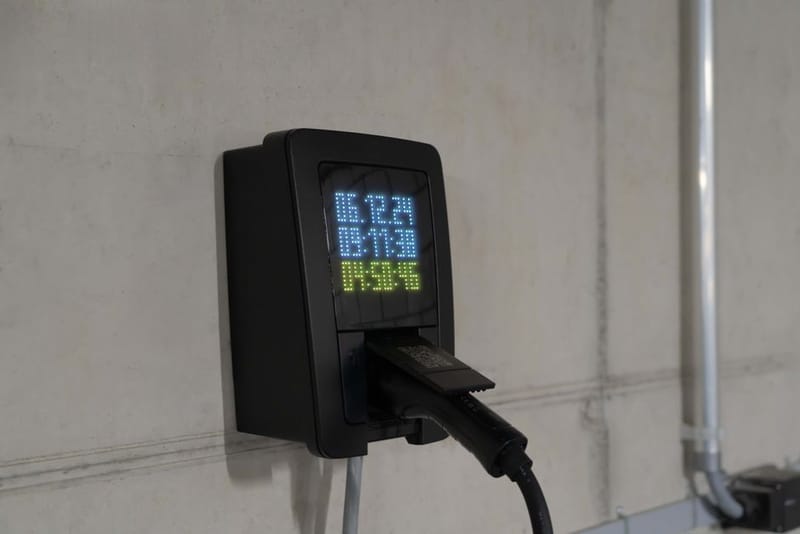
UK 'smart' EV chargers go far beyond timer-based scheduling. This guide covers the core features that matter + which chargers do them best.
Feature 1 - Smart-tariff sync
The most-valuable feature.
How it works:
- Charger has direct API integration with your energy supplier.
- Supplier publishes cheap-rate windows.
- Charger auto-starts charging at start of window; stops at end.
- No manual scheduling needed.
Octopus Intelligent Octopus Go integration:
- Charger registered with Octopus app.
- Octopus sends 'start charging' signal at 23:30.
- Charger stops at 05:30 (or earlier if EV is full).
- Cheap rate 7.6p/kWh during this window (Intelligent Octopus Go, October 2026).
- Pricing per kWh: cheap-rate × actual usage (no peak-rate consumption).
Octopus Cosy integration:
- Multiple cheap windows: 04:00-07:00, 13:00-16:00, 22:00-00:00 at ~10.5p/kWh.
- Charger can use any of them; user sets preferences.
- Manual override available for one-off scheduling.
Why this beats schedule-only:
- Schedule-only: manual setting needs updating if tariff windows change.
- Smart-tariff sync: charger automatically responds to tariff changes (e.g. summer-time shift).
- Smart-tariff sync: avoids accidental peak-rate charging during DST transitions.
UK 2026 chargers with smart-tariff sync:
- Ohme Pro: gold standard for IO + Cosy integration.
- Zappi V2.1+: native Octopus integration.
- Easee Home: works with multiple suppliers via OCPP.
- Wallbox Pulsar Plus: premium integration.
Feature 2 - Dynamic load balancing
Prevents fuse trips.
How it works:
- CT (Current Transformer) clamp on main incoming supply.
- Measures household current draw in real-time.
- If household + EV approaches 80A supply limit: charger throttles.
- Typical: charger drops from 32A to 16A when cooker + heat pump + appliances are running.
- When household demand drops: charger ramps back to 32A.
Why this matters:
- Avoids tripping main fuse during peak household load.
- Eliminates need for supply upgrade in many cases.
- Critical for combined heat pump + EV households.
- Future-proofs install for additional EVs or heat pumps.
UK 2026 chargers with dynamic load balancing:
- Ohme Pro: CT clamp included.
- Zappi V2.1: 'eco' modes throttle based on house current.
- Easee Home: CT clamp supported (separate purchase).
- Wallbox Pulsar Plus: dynamic load balancing via Wallbox Power Boost module.
Chargers without dynamic load balancing:
- Older / cheaper non-smart units (rare new 2026).
- Some import budget units without UK standardisation.
- Risk: trips main fuse when household load peaks.
Feature 3 - Solar integration
Self-consumption optimisation.
For households with solar PV (typical 4 kW UK install):
- Charger detects excess solar generation: house using less than solar producing.
- Diverts excess to EV: charges at variable rate based on solar surplus.
- Tops up from grid: when solar insufficient + tariff cheap.
Charging modes (typical):
- Eco / Solar-only: charge only when excess solar available; pause when solar insufficient.
- Eco-plus / Solar + grid top-up: solar primary; supplement from grid during cheap rate.
- Fast / Grid-only: ignore solar; charge from grid at full speed.
UK 2026 solar-charging leaders:
- Zappi (myenergi): solar-integration leader; designed for solar households.
- Ohme Pro: solar-aware via Solis / SolarEdge integration.
- Wallbox Pulsar Plus + Power Boost: advanced solar logic.
- Hypervolt: simpler solar integration; UK-focused.
Cost savings vs grid-only charging:
- Solar provides ~30-50% of EV charging needs for typical 4 kW system + 60-mile-per-week driver.
- Annual savings: ~GBP 300-500/year vs grid-only charging at smart-tariff rates.
- Combined with smart-tariff: covers ~85% of EV needs at near-zero marginal cost.
Feature 4 - App control
Daily interaction.
App features that matter:
- Schedule sessions: override smart-tariff for specific charging needs.
- Consumption history: see kWh charged per day/week/month/year.
- Cost tracking: GBP charged per session (if tariff integration is correct).
- Notifications: charging complete; supply issue; session interrupted.
- Guest mode: temporary charging access for visitors without full app access.
- Remote start/stop: useful for unexpected needs (e.g. forgot to plug in).
UK 2026 charger app quality:
- Ohme Pro: highest user satisfaction; clean UI; reliable scheduling.
- Zappi: good UI, sometimes complex (many advanced features).
- Easee Home: simple + functional.
- Wallbox Pulsar Plus: feature-rich; occasionally finicky.
- BP Pulse Home: works but less polished than dedicated brands.
Feature 5 - OCPP (Open Charge Point Protocol)
Future-proofing standard.
What OCPP is:
- Open standard for communication between EV chargers + management software.
- Allows third-party tariff platforms to control the charger.
- Enables cross-brand interop in commercial settings.
Why it matters in UK 2026:
- Energy supplier switching: if you change tariff supplier, an OCPP-compliant charger works with the new one.
- Workplace charging: OCPP standard chargers integrate with employer billing.
- Future smart-tariff models: dynamic pricing requires OCPP-compliant chargers.
UK 2026 OCPP-compliant chargers:
- Easee Home: native OCPP 1.6.
- Wallbox Pulsar Plus: OCPP 1.6.
- Some Ohme + Zappi variants: OCPP 1.6.
- Older non-smart units: NO OCPP - cross-supplier switching difficult.
How to check:
- Look in charger spec sheet for 'OCPP 1.6' or 'OCPP 2.0'.
- If not listed: assume not OCPP-compliant; consider this a buying decision factor.
Optional advanced features
Nice-to-haves.
1. V2G / V2H (vehicle-to-grid / vehicle-to-home):
- Bidirectional charging - EV powers home / sells back to grid.
- Rare in UK 2026 (limited compatible EVs).
- Premium chargers only (GBP 4,000-7,000 install).
- Pay-back via Octopus V2G tariffs.
2. Off-peak override:
- Force-charge button bypasses smart-tariff scheduling.
- Useful for unexpected trip needs.
- Most chargers include this via app.
3. Guest mode:
- Temporary EV-charging access without full app credentials.
- QR-code based or PIN-based.
- Useful for Airbnb hosts + neighbours.
4. Energy reporting:
- Detailed kWh / GBP breakdown.
- CSV export for spreadsheet analysis.
- Useful for company-car drivers + tax reporting.
5. Smart-home integration:
- Apple HomeKit / Google Home / Alexa.
- Voice control 'Hey Siri, start charging'.
- Routines + automation possibilities.
6. Whole-house energy router pairing:
- Charger pairs with home energy management (SolarEdge Energy Hub, Givenergy, Solax).
- Coordinates EV + heat pump + battery + solar.
- Best for high-spec smart-energy homes.
Recommended UK 2026 chargers by feature priority
Decision framework.
Smart-tariff priority (Octopus Intelligent Octopus Go primary):
- Ohme Pro: best in UK 2026; native Octopus integration; dynamic load balancing; reliable.
- Cost: GBP 900-1,200 install.
Solar PV household:
- Zappi (myenergi): purpose-built for solar.
- Cost: GBP 850-1,150 install.
OCPP / supplier-switching flexibility:
- Easee Home: native OCPP; supplier-agnostic.
- Cost: GBP 850-1,150 install.
Premium / full feature set:
- Wallbox Pulsar Plus: V2G/V2H capability (with bidirectional add-on); whole-house energy management.
- Cost: GBP 1,100-1,500 install.
Budget-conscious / simple smart:
- BP Pulse Home / Hypervolt: solid smart-tariff sync + basic features.
- Cost: GBP 750-1,000 install.
Avoid in UK 2026:
- Non-OCPP cheaper imports: cross-tariff lock-in risk.
- Chargers without dynamic load balancing: supply trip risk.
- 'Dumb' chargers with timer-only: missing the smart-tariff savings.
What are the most important EV charger smart features?
- Smart-tariff sync (auto-charges during cheap windows; saves GBP 1,200-2,000/year vs flat tariff). 2. Dynamic load balancing (throttles when household load high; prevents fuse trips). 3. Solar integration (if you have solar PV). 4. OCPP compliance (future-proofs against tariff supplier changes). 5. App control (daily interaction).