EV Charger Fuse Box Upgrade UK: Costs, DNO & PEN Rules
Do you need a fuse box upgrade for a 7kW EV charger? UK 2026 guide to consumer-unit, DNO and PEN-fault rules - costs, timelines, regional variation.
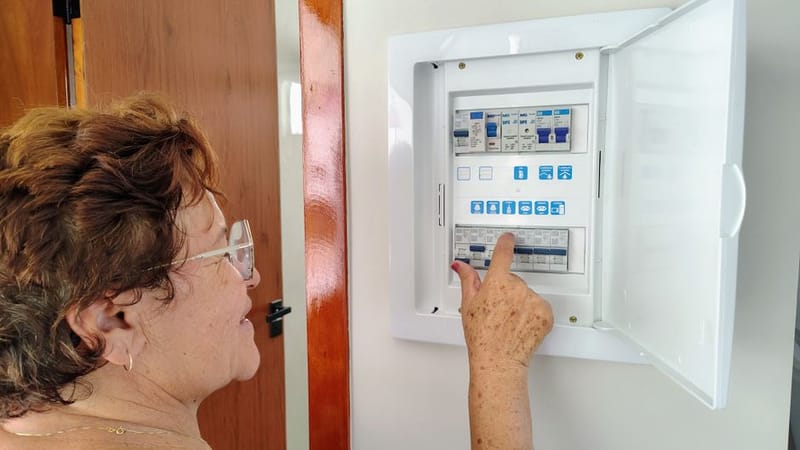
Most UK homes do not need a fuse box upgrade for a 7 kW EV charger - modern installers use load-limiting chargers to work safely behind a 60 A main fuse. You only need a consumer unit upgrade if your existing board uses rewirable fuses, lacks RCD protection, or is full. The real cost driver is usually the DNO supply check, not the consumer unit itself.
When your existing consumer unit is fine
Three things keep most homes off the upgrade list. First, the 7 kW charger sits on its own dedicated circuit - it does not load the rest of the board's spare ways heavily, so a half-full modern unit is fine. Second, the charger itself manages whole-house current via a clip-on CT (current transformer) round the meter tail, so if the kettle, hob and tumble dryer all switch on together it reduces EV charging current to keep total draw under your fuse rating. Third, almost every dedicated home EV charger on the UK market is type-tested with a built-in Type A RCD plus DC fault detection (RDC-DD) inside the unit, so the existing consumer unit doesn't need a Type B RCBO for the new circuit.
An installer will sign off on your current board if it has all of the following: a metal enclosure (BS 7671 §421.1.201 since 2016 for new domestic installs), MCBs or RCBOs rather than rewirable fuses, at least one free way for the EV circuit (or a way that can be freed by combining two existing circuits onto an RCBO), and proof of EICR within the last five years if one is available.
When you do need a new consumer unit
Four boards almost always trigger an upgrade. A wooden- or plastic-bodied unit built before 2016, because the regs now require metal for domestic installs. A board with rewirable fuses (the type with a porcelain carrier and a screw-in fuse wire), because most installers refuse to add a circuit to one. A board with no RCD protection at all - common in pre-2008 installs - because the EV circuit must sit downstream of a Type A RCD anyway. And a fully-populated board with no spare ways and no scope to combine circuits.
For these cases, a like-for-like 12-way consumer unit replacement, fitted at the same time as the charger, runs £500-£800 on top of the charger install cost. The price varies with the number of circuits, whether you need separate RCBOs for every circuit (the modern approach) or you'll accept two RCD-protected banks, and whether the installer needs to add an SPD (surge protective device - usually included on a new board by default).
The DNO supply upgrade - when, why, how much
The Distribution Network Operator (DNO) owns everything before your meter - the service cable in the street, the cut-out fuse, and the service head. Whether you need them involved depends on two thresholds.
The 13.8 kVA rule
If your whole-property Maximum Demand after the EV charger is added stays under 13.8 kVA (about 60 A on a single-phase 230 V supply), the installer can connect first and notify the DNO within one month - this is the ENA's G98 self-certified route. Above 13.8 kVA, the installer must apply to the DNO under G99 before connection and wait for written approval.
The 60 A fuse threshold
If your existing main fuse is more than 60 A - most properties built since the mid-1990s have an 80 A or 100 A cut-out - the installer must notify the DNO regardless of the kVA calculation, because the network operator wants visibility on every install that could push a domestic service over its design rating. Most properties on a 60 A fuse do not need to upgrade unless the house has another high-load appliance (induction hob, heat pump, electric shower with a 9 kW+ rating) already pulling close to that limit.
Upgrade costs and timelines
Some DNOs upgrade a 60 A fuse to 80 A for free when the customer is adding an EV charger or heat pump - it counts towards their low-carbon-connection target. Upgrades to 100 A usually require new 25 mm² meter tails too, because the original 16 mm² tails can't safely carry that current. A combined fuse + meter-tails job typically costs £0-£500 if the DNO carries the work, or £300-£800 if the customer pays a contractor to upgrade the meter tails while the DNO swaps the fuse.
Lead time on a paper application is around 10 working days. A physical upgrade visit (cut-out swap, meter-tail replacement) ranges from 4 to 12 weeks depending on regional network capacity - though installers using the ENA Connect Direct portal often get permission inside a week, with the physical work scheduled for a date that doesn't block the charger install.
PEN fault protection on PME supplies
Most UK domestic supplies use PME (Protective Multiple Earthing, also called TN-C-S) - the earth conductor inside the house is bonded to the neutral at the service head. PME is safe in normal operation, but if the combined Protective Earth + Neutral (PEN) conductor in the street fails, the steel body of any earthed appliance - including an EV plugged in on the drive - can become live. Standard RCD protection inside the consumer unit does not catch this: the fault current routes through the vehicle and the customer touching it, not back through the RCD.
BS 7671:2018+A2:2022+A3:2024 clause 722.411.4.1 closes the gap by requiring PEN fault protection for chargers on PME supplies installed outdoors (or expected to charge outdoor-parked vehicles). Three compliance routes are permitted:
Built-in PEN fault protection inside the charger
Most mainstream UK chargers - Ohme Home Pro, Zappi v2, Hypervolt Home 3 Pro, Wallbox Pulsar Max - include type-tested PEN protection that disconnects the charging cable from earth when an open PEN is detected. Installer just confirms the product is certified under the IET01:2024 specification.
Dedicated PEN-fault detection device wired into the charging circuit
A separate enclosure with its own contactor and detection circuitry. Used when the chosen charger model doesn't include built-in protection, or when the installer prefers a switched-PE solution wired upstream.
Supplementary earth electrode (earth rod)
A 1.2-2.4 m copper rod driven into the ground near the charger, bonded to the EV circuit's earth so the vehicle has an alternative earth path that does not depend on the PME PEN. Conceptually simple but requires soil with reasonable resistivity, and the rod itself plus the resistance test typically adds £100-£250 to the install.
Most installers default to route 1 - a charger with built-in protection - because it's the cheapest, fastest and removes any soil-resistivity concern. If you're being quoted a separate PEN-protection device or an earth rod, ask why; sometimes it's because the installer keeps a stock of older charger models that pre-date the built-in standard, and a different product choice would simplify the install.
The looped-supply problem
About 1 in 8 UK properties - typically pre-1970 terraces, semis, and end-of-terrace houses - sit on a looped supply: a single DNO service cable feeds two or three properties from one street tap, with the cable looping through one house to reach the next. Looped supplies are fine for traditional household loads but can't safely carry simultaneous EV charging or heat-pump demand for multiple homes on the loop.
If you're on a looped supply, the DNO will usually require unlooping - running a dedicated service cable to your property - before approving the charger install. Unlooping is free on a single-phase 80 A or 100 A upgrade in most regions, but it involves groundworks: trench from the street into your property, sometimes also into a neighbour's drive depending on which house sits at the loop start. Lead times of 8-12 weeks are typical, and the work has to be scheduled with the neighbour so they're not left without power during the swap.
If your installer flags a looped supply during survey, expect a multi-month delay before charger install - and a knock-on for any neighbour on the same loop who later wants their own charger or heat pump. Some DNOs will offer to upgrade to three-phase at the same time, but typically only at the customer's expense, so most homeowners stick with single-phase unless they have a specific need for 22 kW charging.
What it all costs together
Typical UK home costs (2026)
- Charger + standard install (existing CU is fine)
- £800-£1,500
- Consumer unit upgrade (add-on)
- £500-£800
- Henley block + EV sub-board (alternative to full CU upgrade)
- £150-£250
- Dedicated PEN-fault detection device
- £200-£350
- Supplementary earth electrode (rod + test)
- £100-£250
- DNO main fuse upgrade 60 A → 80 A
- £0 (most DNOs, free under LCT scheme)
- DNO main fuse upgrade 60 A → 100 A + meter tails
- £0-£500 (DNO) or £300-£800 (third-party tails)
- Unlooping (looped supply → dedicated single-phase)
- £0 (DNO funded, single-phase)
- Three-phase service install (customer-funded)
- £1,500-£3,500+
Worst-case all-in cost for a property needing CU replacement, PEN protection device, and DNO supply upgrade is around £2,200; the typical home with a healthy modern board and a 60 A or 80 A fuse pays only the standard install price.
Why regional DNO differs so much
14 DNOs serve different UK regions, and pricing, free-upgrade thresholds, and lead times vary substantially between them. The DNO is fixed by your address - there's no shopping around. The six biggest are National Grid Electricity Distribution (the West Midlands, South West, South Wales, East Midlands and East of England), UK Power Networks (London, the South East and East of England), Northern Powergrid (Yorkshire and the North East), Electricity North West (Lancashire, Cumbria, Manchester), SP Energy Networks (Central and Southern Scotland, Merseyside, North Wales) and Scottish & Southern Electricity Networks (Northern Scotland and Southern England).
Northern Powergrid and UK Power Networks have the longest unlooping queues at time of writing; SP Energy Networks and SSEN typically clear paper applications fastest. Free-fuse-upgrade limits also differ - most DNOs cover 80 A free, fewer cover 100 A. Your installer will know the rules for your region; if you're getting quotes from multiple installers, the DNO timeline isn't something they can shorten, so a 4-week vs 8-week estimate just reflects different installers' honesty about local network capacity rather than their relative efficiency.
What to ask your installer before booking
Have you surveyed the cut-out and confirmed the existing fuse rating?
Will my consumer unit accept a new circuit, or does it need replacement?
Is my supply PME, TN-S, or TT, and what PEN-protection route are you using?
Have you checked whether my property is on a looped supply?
Will you submit the DNO notification (G98 or G99) on my behalf via ENA Connect Direct?
If a DNO supply upgrade is needed, who pays - me, the DNO, or split?
Is the charger model you're quoting type-tested for built-in PEN fault protection under IET01:2024?
What's the expected lead time from contract to commissioning, including DNO?
A reputable OZEV-approved installer will answer all of these from memory and survey notes. If the answers come back vague - particularly on PEN protection or looped supplies - get a second quote.
Frequently asked questions
Does a 7 kW EV charger always need a fuse box upgrade?
Can I install a 7 kW charger on a 60 A main fuse?
How much does a DNO supply upgrade cost?
What is PEN fault protection and do I need it?
What is a looped supply and why does it matter?
How long does the DNO process take?
Should I upgrade to three-phase at the same time?
Next: pick the right charger for your supply
Once you know whether your supply needs upgrading, the next step is choosing a charger model that pairs well with your tariff and home setup.