Best EV Tariff for High-Mileage Drivers (UK 2026)
High-mileage UK EV drivers (15,000+ miles/year): which tariff actually wins on cost-per-mile, why off-peak windows matter more than headline rates.
If you're a high-mileage UK EV driver - 15,000 miles a year or more, often field-based work, regional sales, long commuting, or a household with two cars sharing one charger - tariff choice matters more than for the average driver. The fuel cost is bigger in absolute terms, so the percentage gap between a good and a bad tariff shows up as real money quickly.
Here's what the choice actually looks like in 2026: real cost-per-mile maths, which tariffs win in which situations, + where the time-of-use tariffs start to break down.
Cost-per-mile maths at 15,000 mi/year
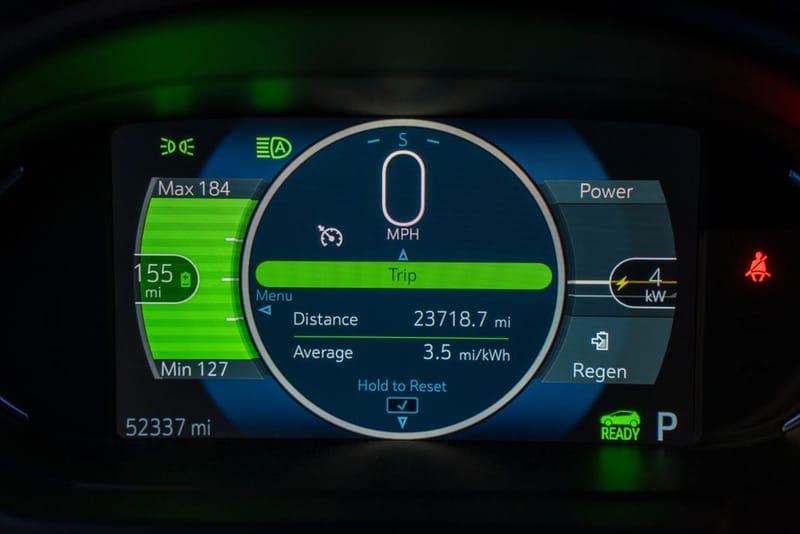
Assuming a typical real-world 3.5 mi/kWh efficiency, 15,000 mi = ~4,290 kWh/year of EV charging. At different tariffs:
- Flat-rate standard tariff (26.32p/kWh all day, October 2026 price cap): £1,129/year. Cost-per-mile: 7.5p.
- Economy 7 (7p off-peak, 32p peak; 50% off-peak): £837/year. Cost-per-mile: 5.6p.
- Octopus Go (8.21p off-peak, ~29p peak, October 2026; 80% off-peak): £532/year. Cost-per-mile: 3.5p.
- Intelligent Octopus Go (7.6p smart window as of October 2026, ~37p outside; 95% off-peak): £388/year. Cost-per-mile: 2.6p.
- EDF GoElectric (6.66p off-peak, 7-hour window, peak near the cap, October 2026; 90% off-peak): £370/year. Cost-per-mile: 2.5p.
- Ovo Charge Anytime add-on (13.33p/kWh PAYG any-time EV charging, October 2026): £572/year on EV charging alone (separate household-electric rate). Cost-per-mile on EV alone: 3.8p.
Net result: the worst-vs-best gap at 15,000 mi/year is roughly £750 of annual home electricity, equivalent to a few hundred miles of free driving. Picking the right tariff is the single biggest cost lever for a high-mileage EV driver.
Why off-peak window length matters more than headline rate
The cheapest headline rate isn't always the best deal. The real determinant is what percentage of your charging actually lands in the off-peak window. At 15,000 mi/year (12 kWh/day average), you need ~85 kWh/week on the home charger. That translates to:
- 5-hour window (Octopus Go classic 00:30-05:30, EDF Overnight): 37 kWh max delivery on a 7.4 kW charger per night. Sufficient for ~50 kWh/week realistically (allowing for not-fully-empty starting state). Tight for 15,000 mi/year unless you split charging across multiple nights.
- 6-hour window (Octopus Go evening variant, some Ovo windows): 44 kWh/night max. Comfortable for 15,000 mi/year on a single car.
- Smart-extended window (Intelligent Octopus, Ovo Charge Anytime): charger runs whenever the algorithm finds cheap kWh - often 8-9 hours total in the cheap rate. Best for high-mileage + bigger batteries (75 kWh+).
Two-car households with one charger run into capacity limits fast. A 5-hour window covers one EV per night; two EVs need either alternating nights or a 7+ hour window.
Top tariff picks ranked
1. Intelligent Octopus Go. The default winner for high-mileage drivers in 2026. 7.6p/kWh (October 2026) in the smart-extended window (typically 11:30pm-5:30am, often stretches earlier when grid demand is low), and the algorithm handles scheduling automatically. Requires compatible charger (Zappi, Easee, Wallbox Pulsar Plus) or compatible EV (Tesla, MG, BYD, Nissan, etc. through the Octopus app). Requires Octopus as your overall electricity supplier.
2. EDF GoElectric Overnight. 6.66p/kWh 11pm-6am (October 2026). Doesn't need a smart charger or specific EV; the cheap rate applies to all your overnight household consumption, not just the car. Useful if you've got other shiftable load (immersion heater, washing machine on timer, battery storage charging).
3. Ovo Charge Anytime. 13.33p/kWh (October 2026) for EV charging at any time of day - the algorithm picks the cheap windows. Add-on to any Ovo household tariff (which has standard peak rates for non-EV use). Good if you can't shift to off-peak windows reliably (shift work) or have an EV that's home during the day.
4. Octopus Flux (with solar). Niche but worth flagging: for EV households with solar, Flux pays peak-window export at 25-30p/kWh and charges off-peak at ~25p/kWh - the spread is genuinely lucrative if you've got a home battery storing midday surplus + cycling it through the 4-7pm peak.
5. British Gas EV Power. 9.5p/kWh midnight-5am (October 2026, an 18-month fix), no smart-charger requirement. Solid third-choice for households who can't switch to Octopus.
When time-of-use tariffs break down
Smart EV tariffs assume you can do almost all your home charging in a tight overnight window. That assumption breaks for several real situations:
- Field workers home for ~12 hours mid-day (arrived 8am, leaving 8pm) - need rapid charging to top up between jobs. The cheap overnight rate doesn't help when the car has already left by midnight.
- Shared-charger two-car households doing 20,000+ mi/year combined - can't fit both nightly demands in one 5-7 hour window without exceeding charger throughput.
- Older EVs (pre-2020) lacking scheduling features - can't be told to defer charging to the cheap window without an external smart charger.
- Households relying heavily on public rapid charging (no home charger at all) - home tariff is almost irrelevant; the dominant cost is the rapid network's 55-79p/kWh + subscription savings.
In these cases the marginal benefit of a smart EV tariff vs a standard flat-rate is small enough that other factors (green generation source, customer service, smart-home integration) start to matter more than the headline kWh rate.
Public-charging supplement for very high mileage
Drivers exceeding 20,000 mi/year typically can't cover 100% of demand from a single overnight home window. The supplement is usually public rapid charging. 2026 subscription bundles that move the needle:
- BP Pulse Subscription: ~£10/month for 10-20% discount on 50-150 kW charging across the BP network.
- Osprey+ Membership: free for primary discount + occasional promo rates.
- IONITY Passport: £18.99/month for 0.39 EUR/kWh on IONITY's premium 350 kW network (motorway-corridor heavy use). Pays for itself at ~600 kWh/month public rapid charging.
- Tesla Supercharger non-Tesla rates: comparable to other networks at 49-69p/kWh; Tesla owners get 39-49p/kWh + the largest UK network density.
The bottom line
For most UK high-mileage EV drivers (15,000-25,000 mi/year, home charger, no shift-work constraint), Intelligent Octopus Go is the cost-per-mile winner in 2026 and the default recommendation. Annual home electricity costs sit in the £370-£500 range vs £900-£1,200 on a flat-rate tariff - the kind of difference that funds a small holiday.
If your driving doesn't fit the overnight-charging pattern or you've got a household constraint that breaks the smart-tariff assumption, look at the Ovo Charge Anytime any-time smart-window or EDF GoElectric. The headline-rate difference is small; the bigger lever for everyone in this bracket is running 90%+ of your charging in the cheap window, whichever window your tariff offers.