Best EV Charger for Intelligent Octopus Go (2026)
Choosing the best EV charger for Intelligent Octopus Go in 2026 - Ohme, Hypervolt, Zappi, Indra and Andersen ranked by real-world use case.
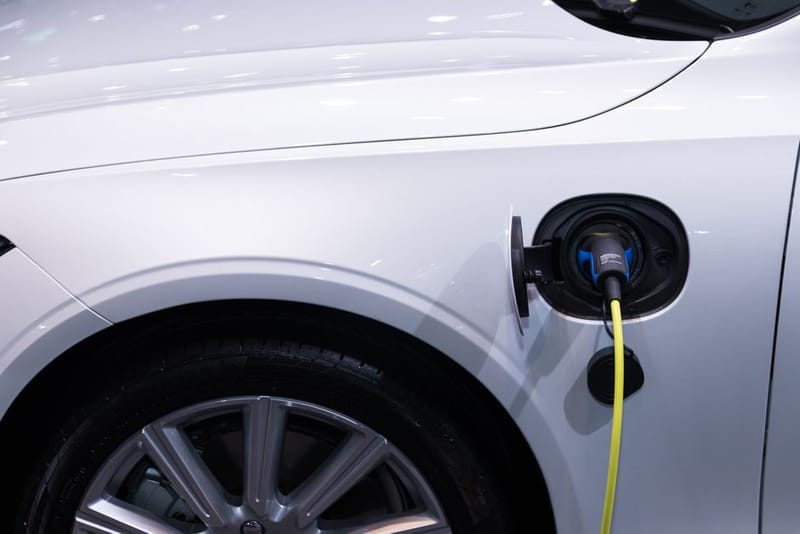
Pick the wrong home charger and your shiny new Intelligent Octopus Go tariff still saves you money - but you lose the dynamic bonus slots that make IOG genuinely cheaper than vanilla Octopus Go. The best EV charger for Intelligent Octopus Go isn't the cheapest, the priciest, or the one with the biggest brand. It's the one whose cloud API plays nicely with Octopus's scheduler for the way you actually drive. This guide ranks the six IOG-compatible chargers worth buying in 2026 - split by use case, not by sticker price.
What Makes a Charger 'IOG Compatible'?
Intelligent Octopus Go works by having Octopus's smart-charging platform either schedule your car directly (via the manufacturer's connected-vehicle API) or schedule your charger directly (via the charger maker's cloud). The full route through compatibility is laid out in our IOG compatible cars and chargers guide - this post focuses on the buying decision.
For the charger-side route, three things matter:
- API integration depth. Octopus has to be able to start, pause, and reschedule charging in real time. Some chargers are tightly integrated (Ohme); others go via a cloud broker and pick up dynamic slots a beat slower (newer additions like VCHRGD).
- Reliability of the bonus-slot trigger. The guaranteed 23:30–05:30 window works on virtually any IOG charger. Where they differ is when Octopus offers a sudden 30-minute bonus slot at, say, 14:00 - and you want to capture it. The faster the schedule propagates, the more pence per kWh you actually save.
- What else the charger does for you. Solar diversion, load balancing, vehicle-to-load (V2L), app quality, tethered vs untethered choice. IOG compatibility is table stakes; this is what separates a £550 charger from a £1,295 one.
Below, we rank the six chargers worth buying for IOG in 2026 by the scenario each is best suited to. All prices are typical retailer pricing including installation; specifications come from manufacturer documentation and Octopus's published IOG integration list as of 2026.
1. Best Overall: Ohme Home Pro
Octopus owns Ohme. That ownership shows in the integration: when Octopus's scheduler announces a bonus slot, the Ohme Home Pro picks it up faster than any other charger on the list - sometimes within seconds rather than minutes. If you have a non-Tesla, non-VW-Group, non-BMW EV (so a Hyundai, Kia, Peugeot, MG, Polestar or BYD), this is the charger we'd buy without hesitation.
The Home Pro is a 7.4kW tethered or untethered unit with built-in PEN-fault detection (no separate earth rod required for most installs), Type 2 connector, and a screen-free design that pushes everything into the Ohme app. The app is genuinely good - schedule overrides, cost tracking, and IOG status all live in one place. Our full Ohme Home Pro review covers the install experience and quirks in detail.
Downside: no solar diversion. If you have rooftop PV and want the charger to soak up surplus generation independently of the grid tariff, Ohme isn't the right pick.
2. Best for Solar + IOG: Hypervolt Home 3 Pro
The Hypervolt Home 3 Pro is the answer to the niche question "I have a 4kW solar array and I want IOG." From firmware 3.3 onwards (rolled out throughout 2025), the Home 3 Pro can switch between three modes: pure IOG scheduling, solar self-consumption (only charges from PV surplus), and a hybrid that prefers solar during daylight and falls back to IOG overnight. No other charger on the IOG list handles the dual logic that cleanly.
The unit itself is sleek - LED strip, no screen, slot for a SIM if you don't trust your home Wi-Fi to stay connected. App quality is on par with Ohme. Our Hypervolt Home 3 Pro review rates it 4.4/5; the half-point gap to Ohme is mostly the slight bonus-slot lag measurements show.
Buy this if: you have or are planning solar PV in the next 12 months and you don't want to give up dynamic IOG bonus slots to get solar diversion.
3. Best Solar Self-Consumption: myenergi Zappi v2.1
Zappi was the original UK solar-diversion charger and it's still the gold standard for households whose primary goal is maximising self-generated solar use. The Zappi's three charging modes (Fast, Eco, Eco+) modulate the supply at 1.4kW increments to track your PV export almost exactly - far more granular than the Hypervolt's stepped approach. Pair it with a myenergi Eddi diverter and you can route surplus to a hot-water tank too.
The trade-off vs the Hypervolt: IOG integration on Zappi is via the myenergi cloud API, and the bonus-slot reaction time is a touch slower. For the guaranteed overnight window it's irrelevant. For chasing 30-minute daytime bonus slots, the Hypervolt edges it. Our Zappi v2.1 review goes deeper on the eco-mode maths.
Buy this if: solar self-consumption matters more than dynamic IOG bonus slots, or you already run a myenergi household.
4. Best Budget: Indra Smart Pro
At around £549 fitted, the Indra Smart Pro is the cheapest IOG-compatible charger on the list - and it's the only one of the six that supports vehicle-to-load (V2L) for the small but growing number of EVs that can power external devices via the charge cable (Hyundai Ioniq 5, Kia EV6, Genesis GV60, MG4 XPower). For Hyundai-Kia drivers in particular this is a quietly compelling combination: V2L from the car, IOG bonus slots from the charger, and the lowest sticker price on the list.
The Indra app is the weakest of the six. Schedule overrides exist but the UI feels dated, and firmware updates ship less often than Ohme's or Hypervolt's. The bonus-slot reaction time is also middle-of-pack. None of this matters if you're chasing the cheapest reliable way onto IOG and don't need solar diversion.
Buy this if: budget is the deciding factor, or your EV has V2L and you want to use it. We don't yet have a full review of the Indra Smart Pro on the site - coming in 2026.
5. Best Design: Andersen A3 / Quartz
Andersen is the design-led option. The A3 hides the charging cable inside the unit when not in use, swappable wood / stone / metal fascias let you match the charger to your house, and the build quality is closer to a piece of garden furniture than a piece of electrical kit. The Quartz tops £1,295 fitted - by a wide margin the most expensive charger on the IOG list - but for drivers who care how the front of their house looks, nothing else comes close.
IOG integration on Andersen is the most recent addition (Octopus added support in 2025). For the guaranteed window the experience is identical to the other chargers; for dynamic bonus slots, expect the same one-or-two-minute lag as the Hypervolt. Solar diversion is available via Andersen's Konnect+ add-on (extra cost).
Buy this if: aesthetics are non-negotiable, the budget exists, and you want IOG bonus slots without compromising on how the unit looks on a brick wall.
Side-by-Side Comparison
| Ohme Home Pro | Hypervolt Home 3 Pro | myenergi Zappi v2.1 | Indra Smart Pro | Andersen A3 / Quartz | |
|---|---|---|---|---|---|
| IOG bonus-slot speed | Fastest (native Octopus stack) | Fast | Moderate | Moderate | Fast |
| Solar diversion | No | Yes (firmware 3.3+) | Yes (most granular) | Yes | Yes (Konnect+ add-on) |
| App quality | Excellent | Excellent | Good (myenergi ecosystem) | Functional | Good |
| Best for | Most buyers without solar | Solar + IOG dual mode | Solar-first households | Budget + V2L EVs | Design-led installs |
Chargers to Skip If You're On IOG
Three popular UK home chargers are not on Octopus's IOG integration list as of 2026:
- Easee One / Easee Up. Excellent units in their own right - load-balancing across multiple chargers on the same supply is genuinely best-in-class - but no IOG integration. Easee owners on IOG get the flat 23:30–05:30 rate only, no bonus slots. Our Easee One review covers what you do get.
- Pod Point Solo 3S. Pod Point's app handles its own off-peak scheduling, but Octopus has no API hook to control it directly. Solo 3S owners can run IOG, but it's effectively a flat off-peak tariff with manual schedule alignment. See our Pod Point Solo 3S review.
- Wallbox Pulsar Plus / Commander 2. Wallbox's myWallbox cloud is functional but Octopus has not announced an IOG integration. Treat Wallbox units as IOG-compatible only for the guaranteed overnight window.
If you already own one of these and are switching to IOG, you don't need to replace the unit - you'll just be on the same rate as Octopus Go, not the dynamic IOG rate. Whether that's worth a swap depends on how often Octopus actually announces daytime bonus slots in your region (more frequent in summer, rare on still winter nights).
Quick Recommendations By Use Case
Hyundai / Kia / Peugeot / MG owner, no solar
Ohme Home Pro. Fastest IOG integration, simplest setup, well-supported.
Tesla / BMW / VW Group owner, no solar
Any reasonable charger - your car handles the scheduling. The cheapest IOG-compatible unit (Indra Smart Pro) is the rational pick.
Solar PV household chasing dynamic IOG slots
Hypervolt Home 3 Pro. Only unit that does solar diversion AND fast IOG bonus-slot reaction.
Solar-first household, IOG is secondary
myenergi Zappi v2.1. Most granular PV self-consumption tracking; IOG works fine for the overnight window.
Budget below £700 all-in
Indra Smart Pro. £549 fitted, V2L bonus for compatible EVs.
Front-of-house cable visibility matters
Andersen A3 or Quartz. Premium price, premium looks; IOG integration on par with Hypervolt.
Frequently Asked Questions
Can I get the IOG rate without a smart charger?
How much do dynamic bonus slots actually save?
Will Octopus add more chargers to the IOG list?
Tethered or untethered?
Do I need three-phase for an IOG-compatible charger?
What about the £350 EV chargepoint grant?
Bottom Line
For most UK drivers signing up to Intelligent Octopus Go in 2026, the best EV charger is an Ohme Home Pro - the integration is the deepest, the app is the cleanest, and the price (~£999 fitted) is in the middle of the pack. If you have solar, the Hypervolt Home 3 Pro is the better pick because it handles PV diversion and IOG bonus slots without compromise. If price is the deciding factor, the Indra Smart Pro at £549 fitted is the cheapest credible option on the list.
Pair any of these with our best home EV charger comparison to cross-check on non-IOG criteria (warranty, installer network, off-grid behaviour), and make sure your DNO paperwork is in order - our G98 vs G99 guide covers the install side.
Switch to Intelligent Octopus Go
Octopus checks your postcode, car and charger before quoting - takes about three minutes.