Affiliate Disclosure
We may earn a commission when you buy through links on our site, at no extra cost to you. This helps us keep the site running and allows us to continue providing free, high-quality content. Our editorial opinions are our own and are not influenced by compensation.
Easee One Review 2026: Compact UK Home EV Charger
Independent editorial review of the Easee One: 7.4kW single-phase, lifetime 4G eSIM, three-on-one-fuse load balancing, and where it sits in 2026.
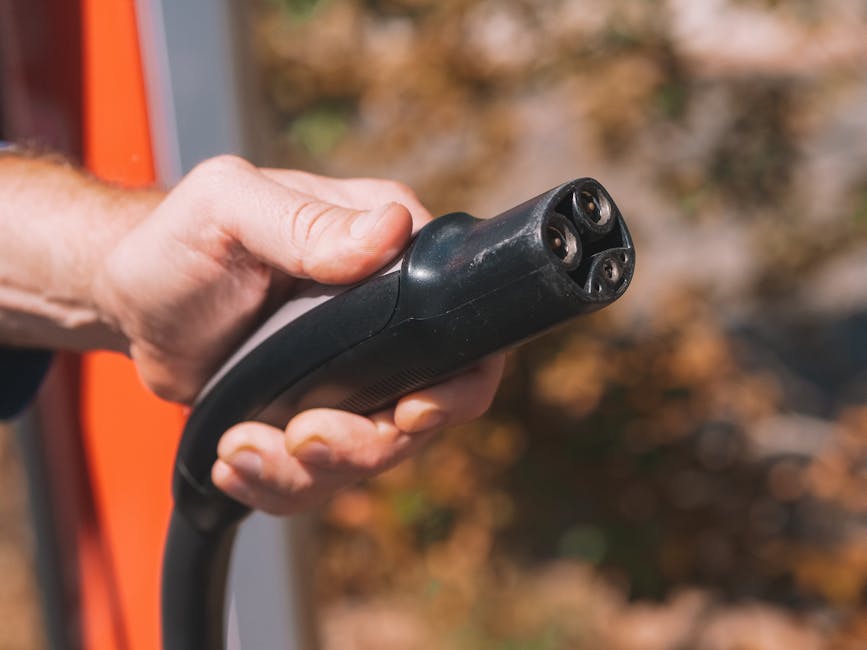
The Easee One has carved out a particular niche in the UK home-charger market: it's the smallest mainstream charger by a clear margin, the only one that ships with a switchable tethered or [untethered](/blog/tethered-vs-untethered-ev-charger/) cable, and the only one that runs three charging points off a single 32A fuse without a dedicated load-management box. Whether those advantages outweigh weaker solar-diversion and a Norwegian regulatory backstory depends on your setup. This review walks through the specs, the unique features, the compatibility picture in May 2026, and an honest reading of the safety story.
Specs at a glance
Easee One specifications
| Specification | Value |
|---|---|
| Max power | 7.4 kW (single-phase, 1.4–7.4 kW dynamic) |
| Connector | Type 2 universal |
| Cable | Tethered or untethered (lockable) |
| Dimensions | 256 × 193 × 106 mm |
| Weight | 1.5 kg |
| Connectivity | Lifetime 4G eSIM + Wi-Fi 2.4 GHz + Bluetooth |
| RFID reader | NFC / ISO 14443 / MIFARE Classic |
| Load balancing | 3 units per 32A fuse (wireless) |
| OCPP | 1.6J via Easee API |
| Earth fault protection | Integrated RCD |
| Warranty | 3 years |
| Colours | White, red, dark blue, anthracite, black |
| Typical UK installed price | £800–£1,000 (May 2026) |
What sets the Easee One apart
Three features differentiate the Easee One from its UK competitors and largely justify its place in the mid-tier price bracket.
Three chargers, one 32A fuse
Up to three Easee One units co-ordinate over an integrated wireless link to share a single 32A fuse. Useful for two-EV households where a fuse upgrade would otherwise be needed, or for shared driveways and multi-occupancy properties. No competitor in the same price bracket replicates this — most rivals require a separate load-management module or a fuse upgrade.
Tethered or untethered, your choice
The cable locks into the charger or comes free, switching the One between tethered (cable always attached) and untethered (bring-your-own cable) without buying two SKUs. Useful if your second-hand EV came with a cable but your driveway gets used by friends with different connectors.
Lifetime 4G eSIM
An LTE Cat M1 eSIM is built in with a lifetime data subscription Easee covers. Most rivals rely on the customer's home Wi-Fi reaching the charger, which is brittle in detached garages or thick brick walls. With the Easee One, the charger keeps reporting and updating even when home Wi-Fi drops.
UK smart tariff compatibility
The Easee One is supported on Octopus Intelligent Go as a linked device, meaning Octopus's app communicates with the charger via Easee's cloud rather than running directly on the charger firmware. In practice the difference is mostly invisible — Octopus schedules cheap-rate charging and the Easee follows — but it lacks the quality-of-life polish of Ohme Home Pro's direct API integration with Octopus.
Worth knowing: the six-hour smart-charging cap Octopus rolled out in March 2026 applies to any IOG-paired charger, including the Easee One. If your daily charging session typically fits inside six hours (most UK households' do), it's a non-event. If you regularly need longer sessions — large packs returning home near empty, multi-EV homes — the cap can bite, and the Easee's load-balancing across three units is no help here because the cap is per household, not per charger.
Load balancing — local and dynamic
Easee positions load balancing as the One's headline feature, and there are two flavours worth distinguishing.
Local load balancing is built into every Easee One and shares a single 32A fuse across up to three units automatically — a wireless mesh decides which unit gets how much power moment-to-moment. No extra hardware needed.
Dynamic load balancing requires the optional Easee Equalizer module clipped onto the main fuse. The Equalizer reads whole-house consumption in real time and tells the chargers how much spare capacity is available, throttling them down when the kettle and oven are on and ramping back up when load drops. This is what Easee positions as its solar-friendly story — when PV exports beat household consumption, the chargers can absorb the surplus.
Compared with myenergi's Zappi, though, this is dynamic balancing rather than true PV-following. The Equalizer doesn't distinguish solar generation from grid import; it just sees net house load. For households where capturing every spare PV kilowatt matters, the Zappi v2.1 remains the better technical fit.
The 2023 safety story — what actually happened
Anyone researching Easee online will run into headlines from 2023 about a Swedish authority finding safety issues. The story is real, but it's worth being precise about what it covers and what it doesn't.
In February 2023, Sweden's Elsäkerhetsverket flagged documentation gaps in the Easee Home and Easee Charge — Easee's original 2019 products. The central concern was that Easee's software-based RCD design had been declared conformity against the wrong standard. Norway's regulator Nkom investigated separately and concluded in June 2023 that the risk of serious faults on already-installed units was low enough that no remediation was required, declining to follow Sweden's lead with a sales ban.
Easee then spent a year with accredited test laboratories addressing the documentation gaps and updating its conformity declarations. In May 2024 the company published a statement confirming the RCD design now declares conformity with the more appropriate European standard.
The Easee One — Easee's current UK domestic product — is sold today with documented RCD compliance, and its product page lists integrated earth-fault protection as standard. The 2023 review applied to the older Home and Charge products, not the One. That's the honest framing: Easee had a real regulatory scrape that took a year to fully resolve, and the resolution lands the company on the right side of the European standards. Buyers who want belt-and-braces reassurance can reasonably wait another year or two of clean operation; buyers comfortable with the resolution can buy with confidence.
Pricing and where the Easee One fits
Unit-only pricing across UK retailers in May 2026 sits in the £405–£630 range, with installation typically adding £400–£600. Installed costs land in the £800–£1,000 bracket, putting the Easee One squarely in the mid-tier — pricier than budget chargers but cheaper than the premium-bracket Andersen A2 or solar-led myenergi Zappi options.
The OZEV chargepoint grant rises to £500 from April 2026 for renters and flat owners (up from £350), which trims the effective installed cost further if you qualify. Workers can also stack the Workplace Charging Scheme on commercial installations.
The One sits below Ohme Home Pro on Octopus integration depth, below myenergi Zappi on solar diversion, and below Hypervolt Home 3 Pro on raw smart-tariff polish — but it's the only mainstream UK charger doing three-on-one-fuse balancing, the only one with a lifetime 4G eSIM, and one of very few that ships tethered-or-untethered out of the box. Whether those Easee-specific features matter to your install is the deciding question.
Frequently asked questions
Does the Easee One work on three-phase power?
Is the Easee One compatible with Octopus Intelligent Go?
Can I run the Easee One without the Easee Equalizer?
Does the lifetime 4G eSIM really cost nothing?
Were UK Easee Ones affected by the 2023 Norwegian safety review?
What's the warranty on an Easee One?
Pair the Easee One with the right Octopus tariff
Most UK Easee One owners pair their charger with Intelligent Octopus Go for cheap overnight rates. Run a postcode quote with your charger and EV before switching.
Pros & Cons
Pros
- Among the smallest UK home chargers (256 × 193 × 106 mm, 1.5 kg)
- Built-in eSIM with lifetime 4G subscription — no ongoing data costs
- Tethered or untethered out of the box — the cable locks either way
- Three units share a single 32A fuse via wireless load balancing
- Five colour options for a discreet installation
- OCPP 1.6J for third-party integration
Cons
- No native solar diversion mode — needs the Easee Equalizer add-on for whole-property dynamic balancing
- Linked-device on Octopus Intelligent Go rather than a directly-integrated tariff-native charger
- App-only interface — no on-charger display or schedule UI
- Reputational drag from the 2023 Norwegian/Swedish safety review of the older Easee Home and Easee Charge models
Our Verdict
A genuinely compact 7.4kW charger with two stand-out features — lifetime 4G connectivity and three-units-per-fuse load balancing — that no UK rival quite matches at the price. Loses ground to Ohme on Octopus Intelligent Go integration depth and to myenergi on solar diversion, but for households without solar PV and on a flexible smart tariff, it's a strong mid-priced pick. Score 4.2/5.