Affiliate Disclosure
We may earn a commission when you buy through links on our site, at no extra cost to you. This helps us keep the site running and allows us to continue providing free, high-quality content. Our editorial opinions are our own and are not influenced by compensation.
EDF GoElectric Review 2026: 7-Hour Overnight EV Tariff
EDF GoElectric review for 2026: 6.99p/kWh from 11pm–6am — the longest off-peak EV window on the UK market, with a 12-month fix and £50 sign-up credit.
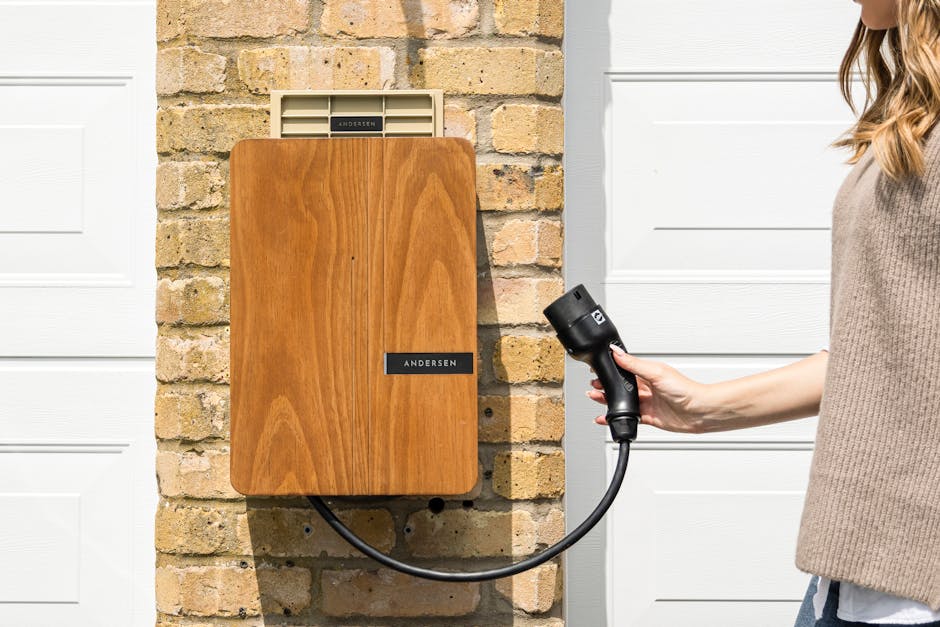
EDF's GoElectric tariff cut its off-peak rate to 6.99p/kWh from 1 April 2026 and extended its off-peak window to seven hours (11pm–6am) — moves that, on paper, make it the cheapest mainstream overnight EV tariff in the UK and the one with the longest cheap window. With Intelligent Octopus Go simultaneously moving to a 6-hour cap and a variable rate, GoElectric has become the obvious safe-harbour choice for drivers who want to lock in their overnight rate for the next twelve months. This review covers what the rate actually buys you, where the catches are, and which households should switch — including the ones still better off staying on Octopus.
What you actually get on EDF GoElectric
GoElectric is a two-rate tariff. From 11pm to 6am every night you pay 6.99p/kWh on whatever the household draws — EV charging, hot water, dishwasher, heat pump on a schedule. Outside that window you pay EDF's standard rate (which moves with the Ofgem cap; check your account for the current peak figure when you sign up).
The peak/off-peak split is the engine of the saving. A 60kWh overnight top-up costs around £4.20 on the off-peak rate; on a single-rate variable tariff the same kWh would cost more than four times as much. EDF's own arithmetic claims £1,181 a year saved versus petrol with GoElectric plus the optional Smart Charging bolt-on, and £1,330 a year if you also stack the £50 sign-up credit running until 24 May 2026.
The Smart Charging bolt-on is worth understanding separately: it's a £5/month bill credit (£60 a year) for opting into smart-scheduled charging via EDF's app, and it's purely additive — your unit rate stays at 6.99p/kWh whether you use it or not. The condition is that you have to plug in regularly enough for EDF to schedule sessions; sporadic users may find the credit is harder to qualify for in months where the car barely moves.
The April 2026 changes: a longer window and a lower rate
Two related changes landed simultaneously on 1 April 2026. The off-peak window moved from a 5-hour 12am–5am window to the current 7-hour 11pm–6am window — two extra hours of cheap power per night. The headline rate dropped to 6.99p/kWh, undercutting the previously dominant Intelligent Octopus Go rate of 8p/kWh and EDF's own previous GoElectric rate.
EDF positioned the change explicitly as a price-leadership move: the company's own announcement noted that the lowest off-peak rate from competitors was 8p/kWh and the longest competitor window was six hours, so on both metrics GoElectric is now the most generous mainstream tariff. Money Saving Expert's independent comparison published in May 2026 places annual cost at around £1,866 for GoElectric versus £2,027 for Intelligent Octopus Go on identical assumptions — a roughly £160 gap before the £50 sign-up credit is applied.
The launch coincided with Octopus's communication that Intelligent Octopus Go would move to a 6-hour off-peak cap and a variable underlying rate (per Octopus's own customer letters in April–May 2026). For drivers on the receiving end of those letters, EDF's combination of a longer window, a lower fixed rate and a 12-month lock made the switch the obvious reaction. Discussion in r/OctopusEnergy through April and May 2026 reflects this: drivers planning to add a second EV, drivers running heat pumps overnight, and drivers who simply want predictability all describe GoElectric as the more practical 2026 choice.
Eligibility and how the smart meter requirement works
Three things have to be in place before you can switch to GoElectric:
- A SMETS2 smart meter (or a SMETS1 unit that EDF can connect to half-hourly readings). EDF will install one free of charge if you don't already have one — typical lead time is two to four weeks depending on engineer availability in your area.
- An electric vehicle registered to the supply address. EDF treats this as a self-declared eligibility check at sign-up; you don't have to nominate a specific car or charger.
- An EDF account — the tariff is open to both new customers (switching in from another supplier) and existing EDF customers (changing tariff within EDF).
The smart-meter requirement is the friction point most likely to delay a switch. If the meter swap is in your future, EDF's process is to confirm the tariff sign-up and then schedule the install — the off-peak rate kicks in once half-hourly readings are flowing, not on day one of the contract. If you already have a connected SMETS2 meter, the rate change is essentially same-day.
One eligibility nuance worth flagging: GoElectric is a domestic tariff with a single supply address. If you're a fleet operator, taxi driver charging at home, or a household with a dedicated commercial supply, the consumer GoElectric product isn't the right fit and EDF's commercial team handles those quotes separately.
EDF GoElectric vs Intelligent Octopus Go vs OVO Charge Anytime
The 2026 EV-tariff market has three names that matter for most UK households: GoElectric, Intelligent Octopus Go, and OVO Charge Anytime. Each takes a different approach.
EDF GoElectric (6.99p/kWh, 11pm–6am, 12-month fix, £75 exit fee). The longest cheap window and the lowest fixed rate currently available. The cheap rate applies to the whole home during the window — same as Octopus — and you don't need a specific charger model. Trade-off: there's no deep API integration with the charger, so you set the schedule on the charger itself rather than handing it to the supplier.
Intelligent Octopus Go (~8p/kWh, 23:30–05:30, variable, no exit fee). The smart-scheduled benchmark. Octopus's algorithm picks the cheapest half-hour slots inside the window for you, and the cheap rate applies whole-home like EDF's. The new 6-hour cap from March 2026 means anything over six hours per night falls back to the higher Boost rate. For households with a supported smart charger and the typical mileage that finishes inside six hours, IOG is still excellent — but it loses on headline rate and on price stability.
OVO Charge Anytime (~14p/kWh PAYG or monthly add-on plans). OVO doubled the PAYG rate from 7p/kWh to 14p/kWh in April 2026, which makes it uncompetitive on direct comparison. The monthly subscription plans (£27.50–£37.50/month) remain interesting for very high-mileage drivers because they bundle public charging credit, but they're a different shape of product — closer to a mobility subscription than a utility tariff.
For the broader picture across all major suppliers, see our best EV tariffs UK 2026 ranking.
EDF's own internal lineup: GoElectric vs Pod Point Plug & Power
One detail that catches drivers comparing EDF tariffs: GoElectric isn't EDF's cheapest rate. EDF's Pod Point Plug & Power tariff offers a lower 6.49p/kWh off-peak rate inside the same 11pm–6am window. The catch is that Plug & Power is a 2-year fixed contract that bundles a Pod Point home charger as hardware, so the lower per-kWh rate is partly subsidising the charger price.
The maths is straightforward: if you need a charger anyway and you're confident you want to stay on EDF for two years, Plug & Power can be the cheaper end-to-end choice. If you already have a charger, or you want to keep the option to switch suppliers in twelve months, GoElectric is the more flexible product despite the slightly higher unit rate. EDF's third option, Pod Drive, is a no-upfront-cost charger plan from £40/month for three years — a different shape of decision again, oriented toward households who want zero capital outlay on the charger.
Where EDF GoElectric falls short
Three caveats are worth raising before signing up.
Exit fees. The £75 exit fee on GoElectric is the headline contractual difference versus Intelligent Octopus Go's no-exit-fee variable product. If you're not confident you'll stay for the full twelve months — for example, you're considering moving house or your usage profile is changing — the exit fee can wipe out a meaningful chunk of the per-kWh saving over a short stay. Cross the £75 threshold of saving (which on typical EV usage takes around 4–6 months) and the fee becomes a non-issue.
No deep charger API integration. EDF schedules through your charger's own timer settings, not through an algorithmic integration like Octopus's. For most households this doesn't matter — you set 11pm–6am on the charger app and forget about it. For households on dynamic-pricing or solar-export setups, the lack of a smart algorithm means you can't have the supplier opportunistically pick up extra cheap half-hours in the daytime; you get the fixed window or nothing.
Customer-service track record. Independent surveys (Which? and Citizens Advice) consistently rank EDF below Octopus on customer-service metrics. The gap matters most when something goes wrong — a delayed smart-meter install, a billing dispute, a switching error. For straightforward sign-ups this is rarely an issue, but it's worth knowing in advance.
Who should switch to EDF GoElectric
Switch if: you want a 12-month price lock, you regularly need more than six hours of overnight charging (high-mileage households, two-EV households, slower-charger setups, large battery packs), or you're being notified that your current Intelligent Octopus Go contract is moving to the variable rate and you'd rather not gamble on where wholesale prices go next.
Stay where you are if: you're on a legacy Octopus fix below 5p/kWh — those pre-2025 deals are still hard to beat and rolling off them voluntarily is rarely the right move. Same applies to fixed-rate variants of standard Octopus Go that haven't yet expired.
Look elsewhere if: you want hardware-bundled tariffs (Pod Point Plug & Power at 6.49p/kWh is EDF's own cheaper option), you're dependent on smart-scheduled API integration with your charger, or you need a tariff with bundled public charging credit (OVO's monthly plans).
Frequently asked questions
What is the EDF GoElectric off-peak rate as of May 2026?
Is there an exit fee on EDF GoElectric?
Do I need an EV to sign up for GoElectric?
What smart meter does EDF GoElectric require?
How does GoElectric compare to Intelligent Octopus Go?
Can existing EDF customers switch to GoElectric?
What is the £50 EDF EV credit and who gets it?
Does the cheap rate apply to the whole home or just the EV?
Check your eligibility for EDF GoElectric
EDF's sign-up flow confirms smart-meter status and tariff availability for your address. The £50 sign-up credit applies to switches completed by 24 May 2026.
Pros & Cons
Pros
- 6.99p/kWh off-peak rate undercuts Intelligent Octopus Go's ~8p/kWh on the headline figure
- Seven-hour off-peak window (11pm–6am) is the longest on the UK market — an hour more than every named competitor
- 12-month price fix removes the variability that pushed many drivers off Intelligent Octopus Go in 2026
- Cheap rate applies whole-home during the off-peak window, not just to EV charging
- Open to both new and existing EDF customers; £50 sign-up credit available through 24 May 2026
- Smart Charging bolt-on adds £5/month (£60/year) bill credit on top of the unit-rate saving
Cons
- £75 exit fee compared to Intelligent Octopus Go's no-exit-fee variable contract
- No deep charger-API integration — you set the schedule on the charger, EDF doesn't algorithmically pick slots
- EDF customer-service rankings consistently below Octopus's in independent surveys (Which?, Citizens Advice)
- EDF's own Pod Point Plug & Power tariff is cheaper at 6.49p/kWh but locks you into a 2-year hardware contract
- SMETS2 smart meter is mandatory; install lead time is typically 2–4 weeks if not already in place
Our Verdict
EDF GoElectric is the strongest mainstream EV tariff for households that want a fixed, predictable overnight rate without depending on a smart-charger ecosystem. The 6.99p/kWh rate undercuts Intelligent Octopus Go on the headline number, the 7-hour 11pm–6am window is the longest available, and the 12-month fix removes the variability that pushed many drivers off Octopus in early 2026. Lose half a star for the £75 exit fee and the lack of deep charger-API integration, but for most UK EV households this is now the cheapest plausible overnight rate. Score 4.2/5.