EV Charger Installation Cost UK 2026: £800–£1,500 Explained
What a 7kW home charger install actually costs in the UK in 2026: £800–£1,500 typical, what drives the variation, and the £500 OZEV grant.
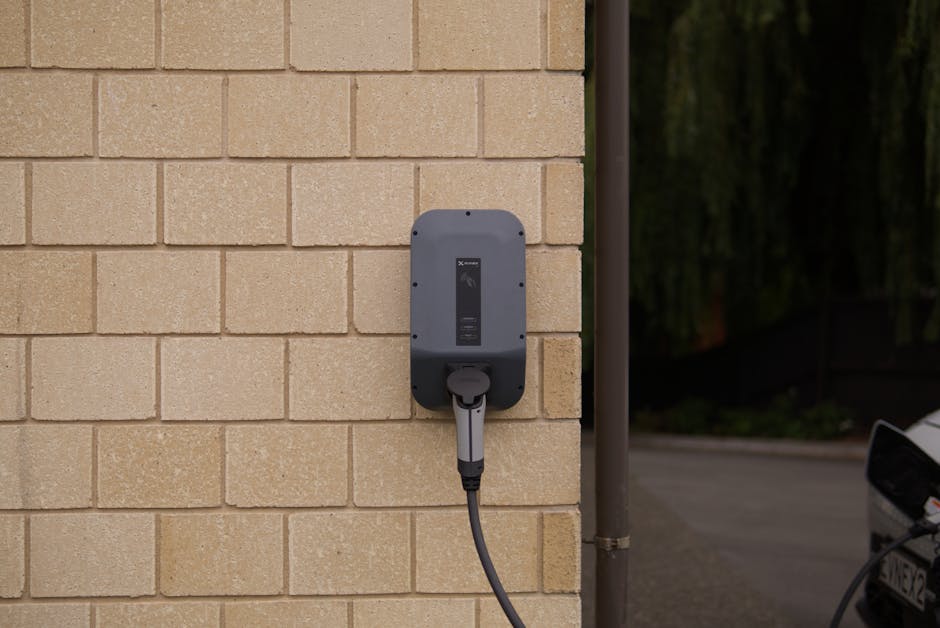
A standard 7 kW home EV charger installation in the UK in 2026 costs roughly £800–£1,500 fitted, with the typical band sitting around £1,100 (Checkatrade's 2026 cost guide places the mean close to £1,110). Hardware accounts for about £400–£700 of that, with the rest going on labour, materials and DNO paperwork. The £500 OZEV chargepoint grant can lower the net cost to £300–£1,000 — but it does not apply to homeowners with a private driveway, only to renters, flat owners, landlords and a few other categories.
What a 7 kW home charger install actually costs in 2026
The headline £800–£1,500 figure covers a vanilla single-phase install: a 7 kW charger mounted on an exterior wall within roughly 10 metres of the consumer unit, with no main-fuse upgrade required and a standard PME earthing arrangement. About 70% of UK homes fall into this band. The remainder either pay less (very short cable runs, basic chargers) or considerably more (long runs, fuse upgrades, three-phase).
Two costs sit underneath the headline: the hardware (the charger itself) and the labour-plus-materials to put it on the wall.
- Hardware (charger unit)
- £400–£700
- Labour
- £400–£500
- Cable, consumer-unit MCB, surge device, RCD
- £50–£150
- DNO notification + commissioning paperwork
- Included by OZEV-authorised installers
- Typical total (no extras)
- £850–£1,350
- After £500 OZEV grant (if eligible)
- £350–£850
Hardware prices vary by feature set rather than power output — a 7 kW Ohme Home Pro sits around £499, the Hypervolt Home 3 Pro near £795, the Easee One around £450 and an Andersen A3 well over £900 (largely for the design and replaceable fascia). Smart features that enable tariff-matched charging on Intelligent Octopus Go or OVO Charge Anytime are the main reason to pay above the entry tier; raw kilowatts are the same. See our best UK home EV chargers ranking for the full like-for-like comparison.
Labour is reasonably consistent across the country at £400–£500 for a standard fit. The variation in the final invoice usually comes from the extras below, not from the labour rate itself.
The £500 OZEV Chargepoint Grant: who actually qualifies
OZEV raised the EV Chargepoint Grant from £350 to £500 per socket on 1 April 2026, and the scheme is funded until 31 March 2027. The eligibility list is narrower than most buyers expect:
Renters of any kind of residential property (flat or house)
Up to £500 per chargepoint; the landlord's consent is needed but the grant is claimed by the renter's installer.
Flat owners (any tenure, including leasehold)
Up to £500 per chargepoint. The most common qualifying group in city flats with off-street parking.
Landlords with residential tenants
Up to £500 per socket, claimable across a portfolio of units.
Workplace Charging Scheme (employers)
Up to £500 per socket, capped at 40 sockets per applicant per site.
State-funded schools and education institutions
Up to £2,000 per socket.
On-street parking grant route (cross-pavement gullies)
Up to £500 per chargepoint for homes without driveways using cross-pavement charging solutions.
The grant is claimed by the installer, not the customer. The price you sign for is the post-grant price — you don't pay the full £1,100 and then reclaim £500. The installer must be OZEV-authorised (a separate accreditation that sits on top of NICEIC, NAPIT, SELECT, OFTEC or ECA membership) and they must notify your DNO of the installation in writing. Both rules carry real weight: OZEV can audit any installation on site, and skipping the DNO notification can void your home insurance.
What pushes the cost up: the variation drivers
The £800–£1,500 baseline assumes a textbook install. Five things commonly push the final invoice above the headline figure. None of them should be a surprise on the day — a competent OZEV installer will surface them in the pre-install survey.
Long cable run from consumer unit to charger (typically +£50–£300)
Standard installs assume up to ~10 m. Beyond that, larger conductor cross-section and extra labour add cost — a 25 m run round an end-of-terrace can add £200 or more.
Main fuse upgrade from 60 A to 80/100 A (typically +£300–£500 of preparation work)
The DNO upgrade itself is free where eligible, but the meter tails, consumer unit and consumer tails must already be the right size — your electrician will charge to do that prep before the DNO visit.
Consumer-unit upgrade or full replacement (typically +£300–£700)
Older split-load units may not have a spare way or may pre-date the RCD-protection rules. A new 18th-edition consumer unit is often the cleanest option.
Three-phase upgrade to support a 22 kW charger (typically +£1,500–£5,000+)
Most UK homes are single-phase and capped at 7 kW. Genuine three-phase capability requires a G99 DNO application (5–65 working days for a quote, 90 days to accept), new service cable to the property, and an entirely new three-phase consumer unit. Read our <a href="/blog/22kw-vs-7kw-home-charger/">22 kW vs 7 kW guide</a> before going down this road.
Service-cable replacement from the street (typically +£500–£2,500)
If the supply cable into your house is shared with a neighbour or undersized for the new load, the DNO needs to replace it. Sometimes free, sometimes chargeable — depends on the DNO's assessment.
PME mitigation device for outdoor charging (typically +£150–£300)
BS 7671 Section 722 forbids using the PME (TN-C-S) earthing system outdoors without a specific mitigation method. The most common solution is a device that disconnects line, neutral and PE if PE-to-earth voltage exceeds 70 V rms — built into most modern chargers but listed separately on older units.
Regional variation: where the typical price actually lands
London and the South East run roughly 10–15% higher than the national average on labour, in line with broader electrician day rates. The North East, North West and Northern Ireland tend to come in 5–10% below. Rural properties pay the biggest premiums — not on labour but on the cable run and on service-cable upgrades, because the existing supply often pre-dates EV-era loads.
Northern Ireland sits outside several of the GB grant schemes; OZEV's homeowner-route schemes apply but the cross-pavement grant routes are tied to local authority pilots and aren't universally available.
How to get fair quotes
Get three written quotes from OZEV-authorised installers. That's the single most reliable way to avoid both overcharging and the bargain-quote problem (quotes £200+ below the local mean almost always omit something material). Ask each installer the same five questions and compare the answers, not just the headline number.
Confirm OZEV authorisation explicitly
Ask for the installer's OZEV reference number. Authorisation is publicly verifiable. Without it, you can't claim the grant and the installer can't legally claim it on your behalf.
Ask who notifies the DNO and when
OZEV-authorised installers must notify the DNO in writing for every installation — within 28 days of the install for G98-bracket connections, before the install for G99-bracket connections. If the answer is hand-wavy, walk away.
Get the cable run measured on a pre-install survey
Phone quotes that haven't seen the property are estimates, not quotes. A real survey — site visit or video walk-through — should measure the run, identify earth-bonding, photograph the consumer unit and check meter tail sizes.
Ask whether a main fuse upgrade is likely
If your house has a 60 A or 80 A fuse and you have an electric oven plus heat pump or instant shower, the answer is often yes. Getting this priced into the quote up front prevents an awkward variation on the day.
Confirm warranty length and what it covers
Minimum 3-year hardware warranty plus 12-month workmanship warranty is the bar. Anything shorter on either is a warning sign — the installer is either cutting corners or using a brand they don't trust.
Red flags in cheap quotes
Some quotes come in well below the going rate by quietly leaving out work that genuinely matters. None of these omissions show up on the day of the install; they show up later, often when you try to claim the grant or sell the house.
Installer cannot give an OZEV reference number
If the grant matters to you, this rules out the quote entirely. If it doesn't, the absence still means you're paying someone who hasn't met OZEV's competence bar.
DNO notification not mentioned or treated as optional
It is mandatory for OZEV-authorised installers, and skipping it can void your home insurance and your hardware warranty. A quote that doesn't mention it is a quote that probably isn't doing it.
Hardware warranty under 3 years
Reputable charger brands all offer 3 years minimum. A 1-year or 12-month-only warranty on the hardware usually means the installer is using grey-import or refurbished units.
No mention of BS 7671 Section 722 / PME mitigation
Section 722 governs outdoor charging on a PME supply, which is most UK homes. A quote that doesn't reference it is either using a charger with built-in PME mitigation (fine, but say so) or hasn't thought about it (not fine).
Vague or missing pre-install survey
Quoting blind from a photo is acceptable for a ballpark; signing a contract on it isn't. The price will move on the day, usually upward.
How install cost fits into total EV ownership
The install is a one-off, so it amortises quickly across the cost of EV ownership. A £1,100 charger that lasts 10 years is £110 per year of capex, against the typical £700–£1,200 a year that home charging on a smart EV tariff saves a 10,000-mile-a-year driver versus public rapid charging. The break-even is roughly two years.
The bigger ongoing decision is the electricity tariff. A 7 kW charger paired with Intelligent Octopus Go (around 7p/kWh off-peak in 2026) costs about a third of what the same charger costs on a standard variable tariff. We've broken the maths down in how much does it cost to charge an EV at home and in best EV tariffs UK 2026.
Frequently asked questions
Q01Can I install a home EV charger myself?
No. Section 722 of BS 7671 and the Smart Charge Points Regulations 2021 require a competent person to design, install and certify the work. OZEV-authorised installers must hold membership of a Competent Person Scheme (NICEIC, NAPIT, SELECT or OFTEC for residential) or the ECA. DIY installation also voids the manufacturer's hardware warranty and your home insurance.
Q02How long does the installation take?
A standard single-phase install takes 3–4 hours on the day, plus the DNO notification paperwork which the installer files afterwards. A main-fuse upgrade or three-phase install can stretch over multiple visits because of the DNO scheduling — expect a week or two of elapsed time even though the on-site work is still half a day.
Q03Does the £500 OZEV grant apply to homeowners with a driveway?
No. The grant route for driveway-owning homeowners (the Electric Vehicle Homecharge Scheme, EVHS) closed in April 2022. Driveway-owning homeowners now pay the full install price. The current OZEV grant routes cover renters, flat owners, landlords, workplace charging, schools, and the on-street cross-pavement route for households without driveways.
Q04Is it cheaper to install a 22 kW charger now and grow into it?
Almost never for a UK home. 22 kW requires three-phase supply, which most UK homes do not have. Adding three-phase typically costs £1,500–£5,000 on top of the install (service cable replacement, new consumer unit, G99 DNO application). Unless you have a specific reason — a long-range EV with a 22 kW AC charger and very short charging windows — a 7 kW charger on a smart EV tariff is the better economic choice.
Q05Will my home insurance cover the new charger?
Yes, provided the install is by an OZEV-authorised installer who notifies your DNO and certifies the work to BS 7671 Section 722. A DIY or uncertified install is usually excluded by standard household policies; some insurers also want explicit notification of the charger being added — a quick policy check is worthwhile.
Q06Do I need to tell my electricity supplier?
Not for the install itself — that's the DNO's remit, not your supplier's. But if you plan to switch to an EV tariff like Intelligent Octopus Go, OVO Charge Anytime or EDF GoElectric, you'll usually need a smart meter capable of half-hourly settlement. Most installers can flag whether your existing meter is suitable.