Andersen A3 vs Quartz: Which Premium Home Charger?
Comparing Andersen A3 vs Andersen Quartz
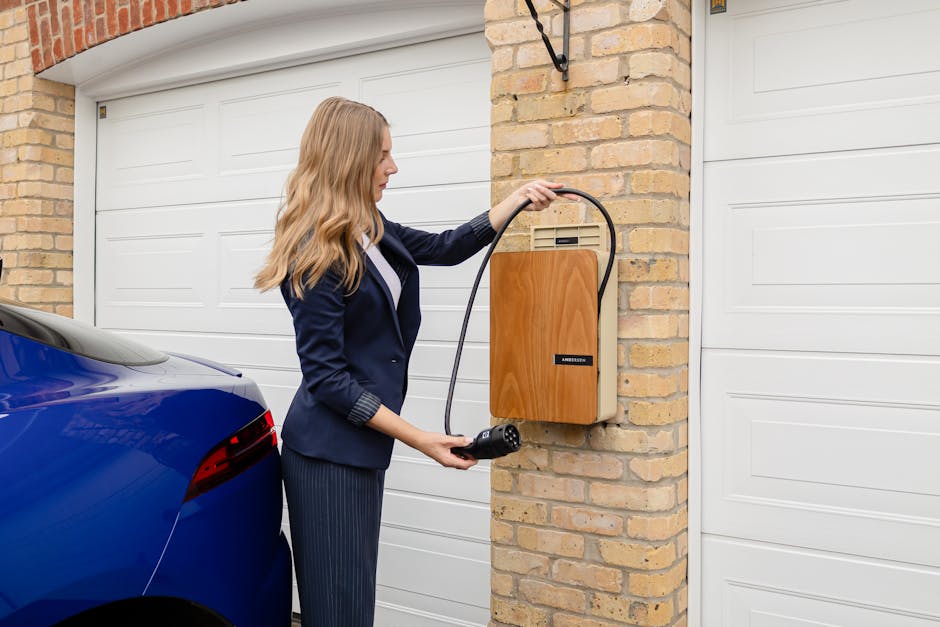
The Andersen A3 and Andersen Quartz share the same UK-built chassis, the same 7kW (or 22kW three-phase) electronics, and the same integrated cable hider that has made Andersen the design-led pick in the British home charger market. The Quartz costs £500 more. This comparison sets out what that £500 actually buys, where each model is the right specification, and how both stack up against the volume competition from Pod Point, Easee and Hypervolt in the May 2026 market.
Quick Comparison
| Feature | Best Overall Andersen A3 ★★★★☆ 4.4 | Andersen Quartz ★★★★☆ 4.2 |
|---|---|---|
| Price | — | — |
| Rating | 4.4/5 | 4.2/5 |
| Best For | The right Andersen for most buyers — same electrical platform and same cable hider as the Quartz, £500 less. Pick this unless the cosmetic finish is genuinely load-bearing for your install. | Specify only when the front-panel finish materially matters — listed buildings, heritage conversions, design-led new builds. Otherwise the £500 is better spent on a longer warranty, a tethered cable upgrade, or simply kept. |
Detailed Breakdown
1. Andersen A3
Pros
- ✓ £500 cheaper than the Quartz at the same electrical spec — 7kW single-phase or 22kW three-phase, same OCPP, same Konnect+ app
- ✓ Replaceable sleek-black front panel — restyle later without replacing the charger
- ✓ Integrated cable hider is the same retracting mechanism as the Quartz
- ✓ Full Intelligent Octopus Go compatibility via Octopus's smart-charger list
- ✓ Solar + home-battery integration is more sophisticated than Pod Point or Easee at this price
Cons
- ✗ £1,099+ ex-VAT is before installation — fully-installed cost lands closer to £1,500–£1,800
- ✗ Konnect+ subscription required for app, scheduling and 4G fallback (£25–£99/year)
- ✗ 3-year standard warranty trails Pod Point's 5-year hardware-plus-install cover at the entry tier
- ✗ No direct consumer affiliate programme yet — pricing varies between authorised installers
2. Andersen Quartz
Pros
- ✓ Customisable wood, stone-effect, or anodised aluminium front panels — no other UK home charger in 2026 offers this level of cosmetic choice
- ✓ Same A3 electrical architecture — identical smart charging, solar integration, OCPP and IOG support
- ✓ Fit for listed buildings, heritage properties, and new-build show-home installs where finish matters to the building consent
- ✓ Replaceable front panels — refresh the look in five years without replacing the unit
Cons
- ✗ £500 premium over the A3 buys cosmetics only — no charging-speed, smart-feature, or warranty advantage
- ✗ Real wood panels need periodic re-oiling outdoors; stone-effect panels can crack on impact — both more fragile than aluminium
- ✗ Headline £1,599 ex-VAT before installation pushes fully-installed cost above £2,000 — multiple times the cost of a Pod Point Solo 3S or Easee One
- ✗ Konnect+ subscription required for connected features — same as the A3
Our Verdict
What the two products share
Before isolating the differences, it helps to be precise about how much of the A3 and the Quartz is identical. Both models use the same internal electronics, the same Andersen chassis, and the same connectivity stack. Specifically:
- Power output. Both are 7kW single-phase (32A) or 22kW three-phase (32A per phase). The three-phase variant is the same SKU on both products — Andersen does not differentiate the Quartz by faster charging.
- Cable management. The integrated cable hider — the signature Andersen feature where the tethered cable retracts inside the unit when not in use — is identical mechanically and ships on both A3 and Quartz at no extra cost.
- Smart charging and OCPP. Both support OCPP 1.6J, which means both work with Intelligent Octopus Go via Octopus's compatibility list. Both also work with EDF GoElectric, OVO Charge Anytime, and any OCPP-aware UK smart tariff. The Octopus integration is feature-complete in both directions: IOG can schedule the unit, and the unit reports back the same charge data Octopus uses to bill the off-peak rate.
- App and subscription. Both depend on Andersen's Konnect+ subscription for app access, remote scheduling, energy data, and 4G fallback if your home WiFi drops. The Konnect+ tiers are the same for A3 and Quartz: £25/year basic, £49/year standard, £99/year premium (which extends the hardware warranty from 3 to 7 years).
- Solar and battery integration. Both connect to home solar inverters and home batteries with the same logic — solar-only, solar+grid, or grid+battery routing. This is more sophisticated than Pod Point's solar integration and broadly equivalent to Zappi's.
- Warranty. Both ship with a 3-year hardware warranty. Both extend to 7 years if the buyer subscribes to Konnect+ Premium.
- UK design and assembly. Both are designed and assembled in the United Kingdom, which is unusual in the home-charger category — most competitors are imported or assembled abroad.
This is a deliberately long list. The point is that the A3 and the Quartz are mechanically and electronically the same charger. The price difference is paid almost entirely for the front panel.
What the £500 premium actually buys
The Quartz differentiator is the front panel. Andersen offers three families of replaceable panels on the Quartz that are not available on the A3:
Real wood. Oak, walnut, and smoked oak panels are cut from solid timber and oil-finished for outdoor durability. They look striking on stone and brick exteriors and pair well with timber-framed houses and Scandinavian-style new-builds. The trade-off is maintenance: outdoor wood needs re-oiling every 12–24 months to stay weather-stable, and a panel that has weathered without maintenance can look worse than a plain aluminium charger after five years.
Stone-effect. The stone-finish panels are not solid stone — they are aluminium cores faced with a stone-effect composite. They are heavier than the wood panels and visually convincing in slate and limestone variants, but they are also more impact-fragile: a knock from a kerbside trolley or a delivery bike can chip the facing. Replacing a panel is straightforward (Andersen sells panels separately) but adds running cost.
Anodised aluminium colours. The Quartz also offers an aluminium-panel range in colour finishes that the A3 does not stock — deep blue, anthracite, copper, and so on. These are the most durable Quartz finishes and the closest visually to the A3's sleek black, but at a £500 premium it is hard to justify them on cosmetics alone unless one of the specific colours is required to match the building.
If none of these specifically matter to the property — and on a standard rendered, brick, or timber-clad UK home, the A3's matt black is usually a clean fit — the £500 is paying for an option that adds no charging value. That is the honest framing of the decision.
Decision matrix
Use the property type, the install context, and the long-term plans for the property to choose between the two:
| Property type | Best fit | Why |
|---|---|---|
| Standard UK home (brick, render, modern build, garage wall) | Andersen A3 | Matt black panel works on every standard exterior. £500 saving is a real saving. |
| Listed building / conservation area | Andersen Quartz (wood or stone) | Planning officers often prefer a charger that visually integrates with heritage materials. The Quartz can be specified to match. |
| Architect-designed new build | Andersen Quartz | If the charger is part of the architectural specification (drawings show it in the elevation), the panel finish is load-bearing. |
| Rental property / buy-to-let with EV charging amenity | Andersen A3 | Cost-of-amenity calculus rarely justifies the cosmetic premium; the A3 still differentiates from a Pod Point fit. |
| Property already wired three-phase | Either at 22kW spec | Both support 22kW three-phase as an SKU — pick on aesthetics, not power. |
| Buyer who wants to extend warranty to 7 years | Andersen A3 + Konnect+ Premium | A3 + Konnect+ Premium 7-year warranty is still ~£400 less than a Quartz. The 7-year cover is the better long-term spend. |
| Solar PV household | Either — pick on aesthetics | Solar integration is identical on both. Buy what looks right on your exterior wall. |
| Heritage timber-framed home | Andersen Quartz (wood) | Real-wood panel integrates with the building palette in a way the A3 black cannot. |
The matrix collapses to a simple rule: choose the Quartz when the building has a specific cosmetic requirement that the A3 cannot meet, and the A3 in every other case.
Installation, warranty, and Refer-a-Friend
Andersen sells both chargers through a network of OZEV-authorised installers rather than direct-to-consumer with bundled install (the Pod Point and Easee model). Typical 2026 fully-installed prices reported by Andersen-authorised installers in the UK are:
- Andersen A3: £1,400–£1,800 fully installed (charger £1,099 ex-VAT + install £250–£600 depending on cable run, fuse upgrade requirements, and consumer-unit work).
- Andersen Quartz: £1,900–£2,400 fully installed (charger £1,599 ex-VAT + the same install variability).
The OZEV chargepoint grant of £350 is available for eligible properties — primarily flats and rental properties — and applies equally to both products. Owner-occupied detached and semi-detached houses are not eligible. Our explainer on the 2026 grants covers eligibility in full.
The 3-year hardware warranty is unconditional; the 7-year extension is conditional on maintaining a Konnect+ Premium subscription throughout the period. The warranty does not cover front-panel cosmetic wear, accidental damage, or installer error — Andersen's Quartz wood panels are explicitly excluded from cosmetic-finish cover after the first year, which is worth understanding before specifying them.
Andersen's Refer-a-Friend programme is the most accessible way to take £50 off the headline price as of May 2026: the existing Andersen owner who refers a buyer gets a £50 John Lewis voucher, and the new buyer gets a £50 John Lewis voucher applied at order confirmation. The programme is open to both A3 and Quartz buyers and is not stackable with installer discounts — but the £50 is real money against an order that is already several thousand pounds.
How both compare to the wider UK market
Neither Andersen is the right buy if you are optimising purely on price-per-feature. The 2026 home EV charger ranking covers the full comparative field in depth, but the headline numbers as of May 2026 are:
- Pod Point Solo 3S: £999 fully installed, 5-year warranty on hardware and install. Strong volume choice. Not Intelligent Octopus Go compatible.
- Easee One: £549 ex-VAT charger, typical fully-installed price £900–£1,200. Strong on price and OCPP, but no integrated cable management.
- Ohme Home Pro: £999 ex-VAT charger, typical fully-installed price £1,250–£1,500. Best-in-class app and smart-tariff integration, especially with Intelligent Octopus Go.
- Hypervolt Home 3 Pro: £1,099 ex-VAT charger, fully-installed roughly £1,400–£1,700. Strong British design pedigree and a closer competitor to the A3 than most.
- Andersen A3: £1,400–£1,800 fully installed. Pays for design-led aesthetics and the cable hider.
- Andersen Quartz: £1,900–£2,400 fully installed. Pays for the same plus customisable cosmetic finish.
Three buying patterns are worth being explicit about. First, if the budget is under £1,200 fully installed, Andersen is not the right brand — Pod Point or Easee will be a more sensible fit. Second, if the priority is the smartest app and the deepest Intelligent Octopus Go integration, Ohme Home Pro is usually a stronger choice than either Andersen at significantly less cost. Third, the Andersen value proposition is specifically about the cable hider and the design — buyers who do not value those features have better options at this price point.
Frequently asked questions
Is the Andersen Quartz worth £500 more than the A3?
Do the Andersen A3 and Quartz both work with Intelligent Octopus Go?
Can I swap front panels between the A3 and Quartz?
Does Andersen install the chargers directly?
Is there an Andersen affiliate discount?
How does the Konnect+ subscription work and is it really required?
See Andersen pricing and Refer-a-Friend availability
Andersen pricing varies by installer and region. The Refer-a-Friend programme is the easiest live discount in May 2026 — £50 John Lewis voucher for both parties.