Solar + EV: How to Charge for Almost Free (UK 2026)
Charging an EV from rooftop solar can drop running costs to near-zero. Zappi Eco+ maths, the Outgoing Octopus 12p rate, and the 2026 best-practice setup.
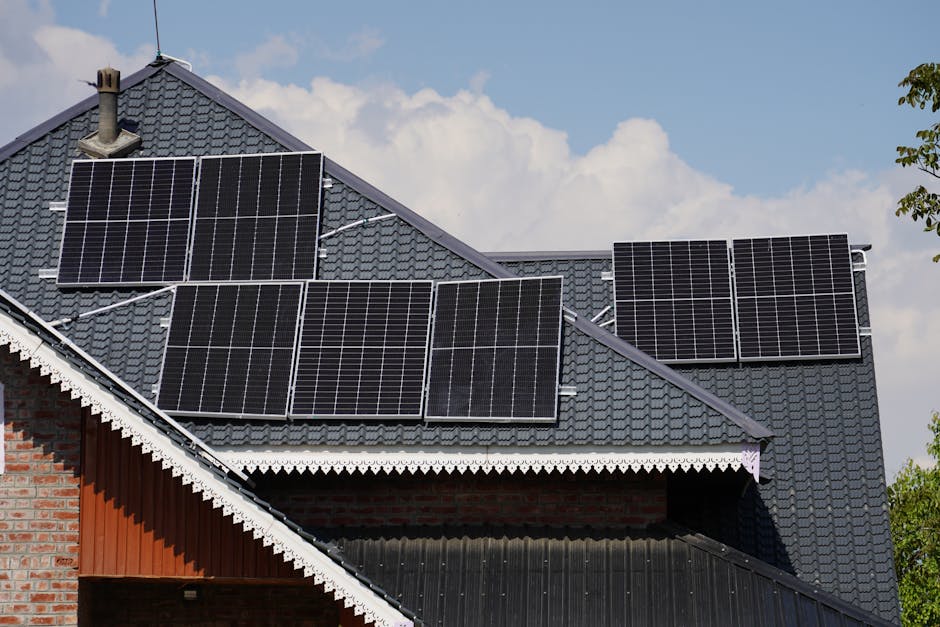
Solar EV charging in the UK has moved from a niche enthusiast setup to a practical mainstream choice in 2026 — driven by falling solar PV costs, a stable Smart Export Guarantee scheme, and the Zappi-style chargers that divert surplus PV straight into the EV. Get the sizing right and a typical 10,000-mile-a-year driver can run their car for under £50 a year. This guide covers the maths, the kit, and the setup that actually pays back.
The economics in one paragraph
A 5-6 kWp solar array in the UK generates roughly 4,500-5,500 kWh a year. An EV doing 10,000 miles at 4 mi/kWh needs about 2,500 kWh of grid-input charging annually. If even half of your generation lands inside the charging window, you've covered most of the car's annual energy from sunlight. The leftover 30-50% is bought at Intelligent Octopus Go's off-peak rate (around 5.49p/kWh in most regions from 1 April 2026), and any solar surplus you don't self-consume is exported to the grid at 12p/kWh via Outgoing Octopus. The net result for many UK households is an EV running cost in the £20-£60/year range — effectively free motoring once the panels are paid off.
How solar-only EV charging actually works
A standard 7 kW home charger draws a constant 7 kW from the grid for the whole session. A solar array on a UK roof in May might be generating anywhere from 1 kW to 5 kW depending on the cloud cover that minute. The mismatch matters: if you simply turn on a 7 kW charger when the sun is up, you'll pull most of the 7 kW from the grid and waste the solar generation on bill offset.
A solar-diverting charger fixes that mismatch in real time. The myenergi Zappi is the best-known example — in Eco+ mode, it reads the live PV generation and household consumption (via a CT clamp or wireless Harvi sensor), then modulates the EV charge between 1.4 kW and 7.4 kW to match only the genuine solar surplus, with zero grid draw. When a cloud passes and surplus falls below the minimum, the charger pauses entirely; when the sun returns, it ramps back up automatically.
Andersen, Indra and Hypervolt also offer solar-diverting modes via integrations with home battery systems or PV inverter APIs. The Tesla Wall Connector pairs with Powerwall for similar behaviour. See our UK home EV charger comparison for the full list with solar feature parity.
Solar charging vs cheap off-peak charging
This is the question that determines whether the solar+EV system actually pays back. The instinctive answer is "charge from solar whenever the sun is shining" — but with Intelligent Octopus Go's off-peak rate now near 5.49p/kWh and Outgoing Octopus paying 12p/kWh for exported surplus, the maths is more nuanced.
| Feature | Best Overall Charge from solar surplus | Export to grid, charge from IOG off-peak |
|---|---|---|
| Price | — | — |
| Rating | — | — |
| Effective cost per kWh | 0p (no grid import) | 5.49p (off-peak import) |
| Opportunity cost | 12p/kWh — surplus you don't export | 0 (you got paid for export) |
| Net economic value | 12p/kWh saved vs export | 12p export − 5.49p import = 6.51p/kWh saved |
| Best when | Summer, mid-day, EV at home | EV not at home during the day |
The first option (direct solar) is worth ~12p/kWh in displaced grid imports; the second option (export then re-import at off-peak) is worth ~6.51p/kWh. Direct solar wins on a per-kWh basis. The catch is that direct solar requires the EV to be parked at home during the generation window — for office commuters, the car is at work between 9 am and 5 pm, when generation is highest. For those households, exporting and re-importing overnight is actually the higher-value path for the kWh that would otherwise have been wasted.
Sizing the system
The 2026 best-practice setup for a UK home that already plans to run an EV looks like this:
Recommended 2026 UK setup for EV + solar self-consumption
| Specification | Value |
|---|---|
| Solar PV array | 5-6 kWp (12-14 panels at 425-450W each) |
| Annual generation | ~4,500-5,500 kWh (south-facing UK average) |
| Home battery | 5-10 kWh usable capacity |
| EV charger | 7 kW with solar-diversion mode (Zappi v2.1, Indra, Andersen + Powerwall, Hypervolt + PV API) |
| Import tariff | Intelligent Octopus Go (5.49p off-peak) |
| Export tariff | Outgoing Octopus (12p flat, since 1 March 2026) |
| Indicative total install cost | £10,500-£14,000 (solar £6-8k, battery £3-4k, charger £900-£1.2k) |
The sizing is deliberately conservative on PV (5-6 kWp rather than maxing the roof to 8-10 kWp) because once you've covered annual EV charging plus typical household usage, marginal kWh of generation only earn 12p/kWh on export — they don't displace anything more expensive. Larger arrays only make sense if you'll also be running a heat pump or have a second EV.
When a home battery helps
A home battery makes economic sense when there's a structural mismatch between when the panels generate and when the household uses energy. Three scenarios where it pays back well:
EV is at the office 9-to-5. The car can't absorb midday surplus. A 10 kWh battery captures generation in the day, then trickle-charges the EV during the 11:30 pm-5:30 am whole-home off-peak window if it's not been used. Without the battery, the surplus exports at 12p/kWh; with the battery, you displace ~5.49p of import each kWh — earning the 6.51p delta minus round-trip losses.
Solar generation collapses in December and January to maybe 100-150 kWh/month for a 5 kWp system. A battery doesn't fix winter — but it lets you load-shift IOG's whole-home off-peak window: charge the battery during 11:30 pm-5:30 am at 5.49p, discharge it during daytime peak hours at 32p. That's a 26p/kWh arbitrage.
If you ever switch to Octopus Flux or Intelligent Flux (which pay variable export rates with afternoon spikes), the battery can hold generation back and export it at the higher rate. Outgoing Octopus's flat 12p doesn't benefit from this arbitrage — the battery is purely for self-consumption optimisation under Outgoing.
When a battery doesn't help
Skip the battery (or run a smaller one) in these cases:
A second-car household or a remote worker can divert most surplus directly to the EV via Zappi Eco+. The EV is effectively the battery — at a higher round-trip efficiency than chemical home batteries (~95% AC-to-DC for an EV; ~85-90% round-trip for a Powerwall).
Low-mileage drivers (under 8,000 miles a year) and small EVs (Fiat 500e, Honda e) won't generate enough self-consumption value to amortise a £3-4k battery. Direct EV charging from solar plus modest off-peak top-ups is sufficient.
East-west splits and shaded roofs generate flatter midday curves than south-facing systems. Less surplus, less need for a battery to time-shift it. Pair with a larger array instead.
Worked example: a 10,000-mile-a-year household
Assumptions: Reading-area south-facing 5 kWp array generating 4,800 kWh/year. EV doing 10,000 miles at 4 mi/kWh = 2,500 kWh needed. Household baseline usage (excluding EV) 3,000 kWh/year. Adult working from home 2-3 days/week — EV at home roughly half of generation hours.
Annual energy and cost breakdown
| Specification | Value |
|---|---|
| Solar generated | 4,800 kWh |
| Self-consumed (home base load) | ~1,500 kWh × 32p saved = £480 |
| Self-consumed (EV direct, Zappi Eco+) | ~1,400 kWh × 32p saved = £448 |
| Self-consumed (battery time-shift) | ~800 kWh × 26p delta = £208 |
| Exported via Outgoing Octopus | ~1,100 kWh × 12p = £132 |
| EV shortfall from IOG off-peak | ~1,100 kWh × 5.49p = £60 cost |
| Household import shortfall | ~700 kWh × 5.49p (mostly off-peak) = £38 cost |
| Net annual benefit | £480 + £448 + £208 + £132 − £60 − £38 = £1,170 |
Against an installed cost of roughly £11,000-£12,000 for the solar + battery + charger combination, the £1,170/year benefit gives a payback period of 9-10 years before any inflation adjustment on grid electricity. With the EV's annual fuel cost effectively dropping from £1,200+ (a 35-mpg petrol car at 140p/litre over 10,000 miles) to £60, the comparison-to-petrol payback is closer to 7 years.
Pitfalls to watch for
A few setup details that commonly trip up first-time solar-plus-EV households:
Pros
- Use a CT clamp or Harvi sensor — without it, the charger cannot see live generation and Eco+ mode is effectively disabled.
- Set the Zappi 'Minimum Green Level' deliberately. 100% means strict solar-only with pauses on cloud; 50% lets the grid backfill up to half the charge.
- Charge the EV via the 11:30 pm-5:30 am whole-home off-peak window in winter — the same window covers a heat pump's worst-case heating period.
- Register the system with the DNO (G98 or G99 depending on inverter rating) before commissioning; Outgoing Octopus requires the MCS certificate.
- If you have a heat pump, prioritise battery charging in winter and EV charging in summer — the seasonal demand mismatch favours that split.
Cons
- Avoid oversizing PV beyond 6 kWp on a roof if your annual consumption is below 8,000 kWh — surplus only earns 12p/kWh and the payback period extends fast.
- Don't run the EV charger in Eco+ mode if the EV needs a guaranteed full charge for a long trip tomorrow — switch to Fast mode and accept the grid import.
- Don't ignore the Intelligent Octopus Go 6-hour cap — pairing a big EV with a small array means you'll still hit the cap on winter nights. See our <a href="/blog/intelligent-octopus-go-six-hour-charge-cap/">6-hour Charge Cap guide</a>.
- Don't size the home battery to cover the entire EV — that's £15k+ of chemistry replacing £5k of solar diversion logic.
- Don't forget the Outgoing Octopus rate cut to 12p (down from 15p in March 2026) when running ROI projections from older guides.
Outgoing Octopus and the SEG landscape
The Smart Export Guarantee (SEG) is the regulatory framework that requires UK electricity suppliers with 150,000+ domestic customers to offer some form of export tariff to small-scale solar generators. Each supplier sets its own rate. Octopus Outgoing has been the most-used because of its simplicity (flat rate, no time-of-use complexity) and competitive pricing.
On 1 March 2026 Octopus cut the Outgoing rate from 15p/kWh to 12p/kWh — the first change since the 2022 increases. The headline rate is still competitive against most rival SEG offerings, but the gap has narrowed. Customers locking in long-term should run their payback maths at 12p, not the historical 15p that older guides still reference.
Note that Outgoing Octopus is opt-in and requires a SMETS2 smart meter operating in HH (half-hourly) mode and an MCS certificate from the install. Without HH metering, suppliers default to the lower SEG export band.
Frequently asked questions
Do I need a smart meter for solar EV charging?
What's the difference between Zappi Eco and Eco+?
Can I charge an EV directly from solar without a special charger?
Should I get a battery before or after the EV charger?
Does Outgoing Octopus pay for exports while I'm on Intelligent Octopus Go?
What roof orientation works best for EV charging?
Compare UK EV tariffs
See how Intelligent Octopus Go, Octopus Go and OVO Charge Anytime stack up for solar households in our ranked 2026 guide.